Functional top-coat
The outer surface helps resist staining, repels water and self-heals light swirl marks with heat. Deep cuts through the film cannot heal themselves.
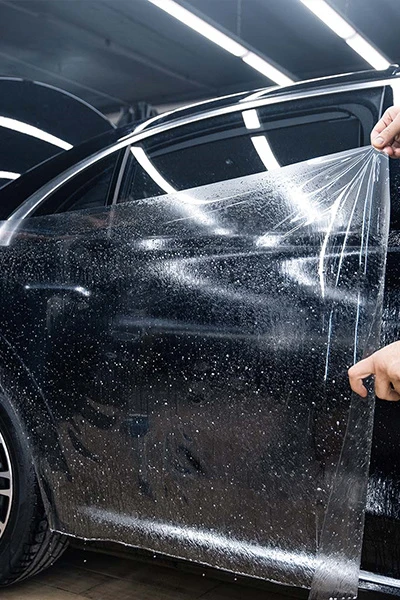
PPF is a three-layer system: self-healing top-coat, optical TPU base and pressure-sensitive adhesive. See what each layer does and what PPF cannot replace.
Solution 02 · Paint Protection Film
According to VEGO’s records, paint protection film combines a new-generation top-coat, an optical-grade aliphatic TPU substrate and a customized pressure-sensitive adhesive system. These three layers must work together to deliver gloss, elasticity, self-healing and stability in use.
Multi-layer construction
The outer surface helps resist staining, repels water and self-heals light swirl marks with heat. Deep cuts through the film cannot heal themselves.
Provides clarity, elasticity and impact absorption. Older documents mention raw material sources such as Lubrizol and BASF; the actual configuration depends on each SKU.
Holds the film steady on the paint while still allowing correct removal. Installation quality decides the film edges, air bubbles and adhesive marks.
Peeled off during installation, it keeps the adhesive surface clean until it meets the vehicle’s paint.
Real-world protection
Installation coverage
Front bumper, hood edge, mirrors and door handle cups: suited to city cars that need the easily scratched spots treated.
Front bumper, full hood, fenders and mirrors: suited to cars that often travel on highways.
Protects all panels evenly, limits gloss differences and makes overall care convenient.
Screens, center consoles or piano-black surfaces need their own film type and technique; exterior film should not be used casually.
Aftercare
Do not pressure wash or put heavy force on the film edges during the period your dealer recommends.
Use a neutral solution and clean cloths; avoid stiff brushes and abrasive polishes.
Remove bird droppings, tree sap and insects early to reduce the time chemicals sit on the surface.
Look over the film edges, deep curves and panels often hit by flying stones.
If the film tears or a panel dents, let your dealer assess replacing the section rather than pulling or peeling it yourself.
Keep your card code and look it up online; final terms follow the exact SKU activated.
FAQ
Clear gloss versions mainly add a sense of depth and gloss; matte or colored versions change the surface finish.
On stable original paint with correct removal, the adhesive system is designed to limit any effect. Repainted or weak surfaces need separate assessment.
Mainly light swirl marks in the top-coat. Deep scratches, tears or punctures in the TPU need the film section replaced.
Aliphatic TPU and the top-coat improve yellowing resistance, but lifespan also depends on the SKU, environment, care and installation quality.
The VEGO team can advise you on film lines, dealer terms and technical support.
Call 0924 802 802Send a request