Glass construction
Identify single, laminated, tempered or insulated glass, and any Low-E coating.
A proprietary formula with nano ceramic: privacy from outside, clarity from inside and high heat insulation.
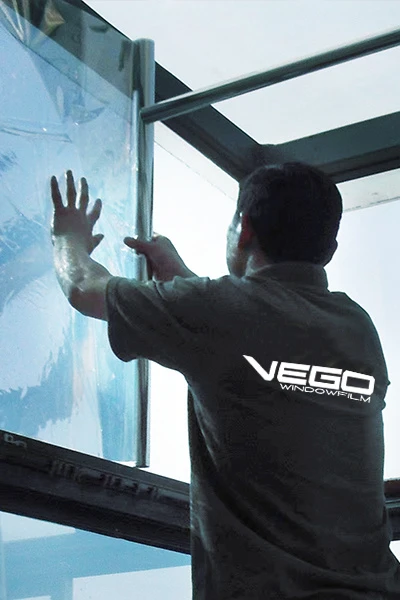
Solution 03 · Architectural Film
VEGO’s documents describe optical-grade architectural film that uses a combination of titanium nitride, tungsten oxide, metal layers and Nano Ceramic. The goal is to manage solar energy, reduce glare, support UV protection and create privacy without replacing the whole glazing system.
The mandatory starting point
Identify single, laminated, tempered or insulated glass, and any Low-E coating.
West and east elevations and glass roofs receive different heat loads and sun angles over time.
Large panes and uneven shading need careful review for thermal stress.
Edge cracks, chipped corners, aged gasket sealant or existing film are signs that something must be dealt with first.
Balance the need for glare reduction, heat control, privacy, glass color and natural light.
Assess from both inside and outside, by day and by night, especially for showrooms and homes.
Design goals
Reduces the solar energy entering the space to support the air conditioning and improve comfort near the glass.
Limits reflections on screens and work areas; visible light transmission that is too low can make a space needlessly dark.
The one-way effect depends on the difference in brightness. At night, when it is brighter indoors, curtains or another added solution are still needed.
Helps reduce UV rays and some of the heat, two of the many causes of material fading, along with visible light and time.
Pick the sun direction and film type to see how the room changes, with a note on glass cracking risk.
This simulator needs JavaScript. Send your project details for a site survey.
Applications by building type
Reduces sun in living rooms, bedrooms and light wells, keeping the glass color in harmony with the architecture.
Reduces glare on screens, improves comfort beside the glass and adds privacy to meeting rooms.
Balances the view of products from outside with heat, glare and display colors.
Prioritizes the view, the guest experience and consistency across many panes.
High heat loads and unusual installation angles; survey the glass construction and installation access together.
Reduces glare and heat in work areas while weighing natural light and safety requirements.
Project process
Record the glass type, dimensions, sun direction, defects and access conditions.
Agree the order of priority between heat, glare, privacy, color and natural light.
Place samples on the actual glass and assess from inside and outside at several times of day.
Calculate quantities by pane, height, protective measures and the building’s operating plan.
Clean the glass, cut the film, align the edges and manage the solution area by area.
Check the appearance, advise on drying time and activate the warranty by SKU.
FAQ
No. The effect depends on which side is brighter; at night you usually need curtains to keep your privacy.
An unsuitable choice can increase thermal stress. That is why the glass construction, condition and size must be established before installation.
It is not mandatory, but uneven coverage can create color and heat load differences between panes. Coverage should be designed around your goals.
The term must not be assumed from introductory content. The card must carry the exact term of the SKU activated in the database.
The VEGO team can advise you on film lines, dealer terms and technical support.
Call 0924 802 802Send a request