There are many types of window film available today. Depending on your household’s needs, choose the type that serves you best from the groups below. Actual results also depend on the type of glass, the film configuration and the skill of the installer.
Film types by need
Heat-insulating window film brings year-round comfort to your home. It reflects the summer sun’s heat and lowers the overall heat in the home, so you feel cooler, use the air conditioning less and save energy. In winter, the heat shield keeps up to 55% of the heat inside. The film also reduces the fading of furniture and flooring by blocking up to 99% of UV rays. It is an affordable, energy-saving upgrade for any existing window, including double windows, and it pays for itself in less than a few years.
Anti-glare or static-cling film reduces glare and can be removed and reused. It prevents reflections on TV and computer screens, can improve the look of your home, and also blocks 99% of UV rays. Anti-glare film should be applied on the inside of single-sash windows and on the outside of double-sash windows.
Privacy film blocks 99% of UV rays. Frosted translucent film lets light through and keeps your privacy 24 hours a day. One-way film protects your privacy by day: you see out normally from inside, but by day it is hard to see in from outside. Black ESD window film also provides daytime privacy and reduces the light entering the room.
Key terms when comparing film
- Solar energy rejection rate: measures how well the film stops infrared heat, UV rays and visible light from entering the living space. The higher the number, the more comfortable you feel.
- Visible light transmission: measures how light or dark the film is. The lower the number, the darker the film. Film with 49% visible light transmission strikes a good balance between glare reduction and visibility.
- Visible light reflectance: measures the percentage of visible light reflected by the film. The higher the number, the brighter the outward appearance.
- UV rejection rate: measures how much UV is blocked when the film is applied to glass. UV rays can prematurely fade curtains, furniture, flooring and decorative items.
Selection criteria
- Light transmission suited to each glass position.
- Infrared and UV rejection.
- Mirror effect, color and night-time visibility.
- No blocking of GPS, phone or ETC if the car uses these systems.
- A warranty policy you can look up.
Application steps
First, measure and record the length and width of each pane of glass you want to film to work out how much film to buy. Add 15% to allow for waste.
Step 1
Mix about 1 spoon of dedicated cleaner with 1 bottle of water and wipe the window thoroughly clean. This mixture has the right pH for applying film and ensures the final clarity. Never use cleaners containing vinegar or ammonia on the film or window, as they can damage the film.
Step 2
Cut a piece of film 2 cm wider and 2 cm longer than the window you plan to cover.
Step 3
Spray plenty of solution on the window and keep your hands wet so you leave no fingerprints on the film.
Step 4
Use two pieces of tape to separate the liner from the film. Once about 2 cm of adhesive is exposed, spray solution onto the film. For large areas you will need a helper so the film does not get contaminated as the liner comes off.
Step 5
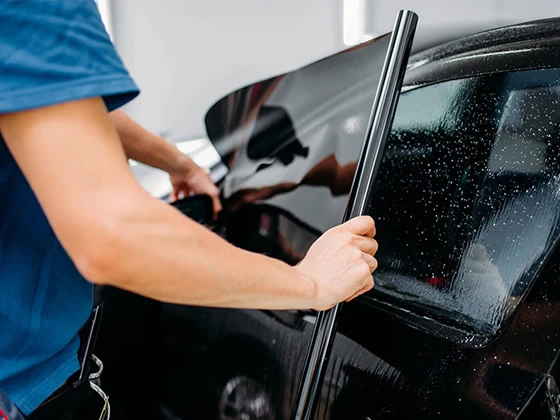
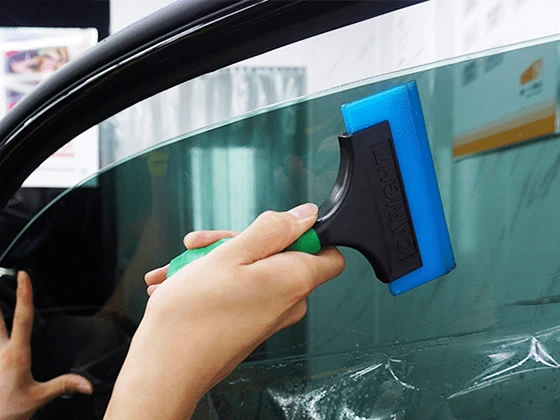
Starting at the top, place the adhesive side of the film on the glass and work your way down. Position the film in the center of the glass and spray with solution. Squeegee out all air bubbles to within 5 cm of the window edge. Keep the film surface wet with solution so the squeegee glides easily.
Step 6
Use a utility knife to cut the film. Leave a 2-3 mm border between the film edge and the window.
Step 7
Spray the film surface again and squeegee out all the air bubbles. The bubbles will escape through the gap between the film and the window edge.
Step 8
The film begins to adhere within 30 minutes and is usually fully dry within four to eight days.
After application
Do not lower the windows during the period your technician recommends. Small water bubbles may need time to evaporate; if creases, large dust particles or lifting edges appear, contact your dealer.