The heat lamp test is trustworthy for exactly one thing: showing that the film blocks the infrared that particular lamp gives off. It does not tell you how cool the film will be in real sun, and it is nowhere near enough to rank one film above another. Watch it if you like, but don't pay for it.
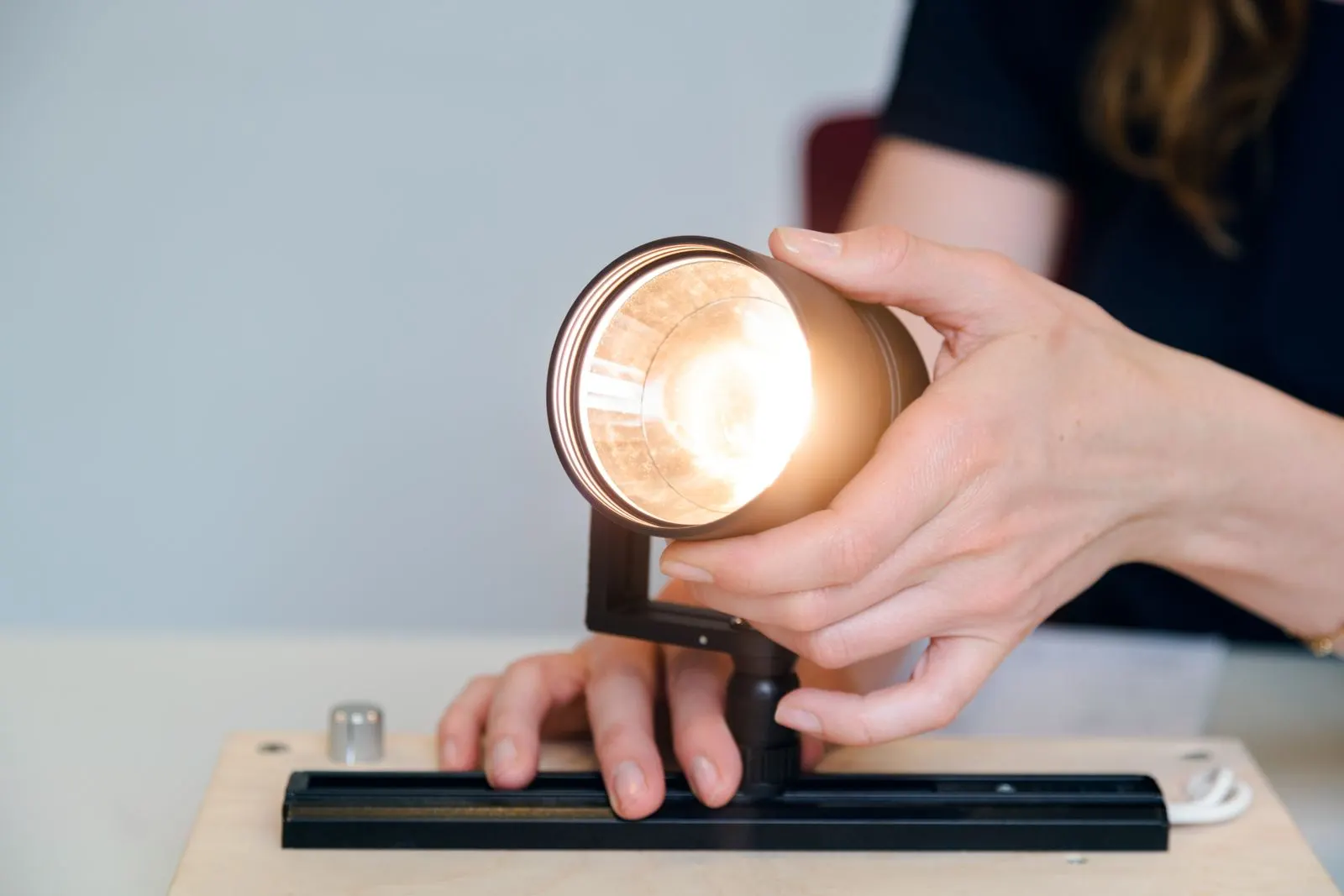
A familiar scene at many shops: a glass box, two or three sample films, and a glowing red heat lamp. The installer tells you to put your hand behind the bare glass, and it stings right away. Move it behind the expensive film, and your hand feels cool. In a few seconds you feel like you have checked the truth with your own hand, and the expensive sample has won.
The problem is that your hand was just led exactly where the seller wanted it.
What does the heat lamp test show?
A heat lamp puts out a lot of infrared. If the film blocks most of that band, your hand feels less heat. That is real, not a magic trick. If a fake film claims "infrared rejection" but feels no different from bare glass under the lamp, the demo has helped you rule it out.
So the lamp is useful as a rough filter: does the film handle infrared or barely at all? Stop there and it is an honest demonstration.
Why doesn't it represent the sun?
Because the sun is not just infrared. At ground level, about 52 to 55% of the energy is infrared, 42 to 43% is visible light and 3 to 5% is UV. Those figures are taken from a summary reference, and they are enough to show that nearly half of the sun's energy sits outside the infrared story. A heat lamp and real sunlight have different spectra, so a test that leans on one band favors the films that are strong in that band.
One international brand's spec sheets make the gap clearer. A 77% VLT film lists SIRR of 83%, while its TSER is only 44%. Two films at 19% and 29% VLT both list IRR of 90%, but their TSER is 65% and 62%. The measurement bands differ, so these numbers can't be compared directly. Our reasoning goes like this: under the lamp, that light film may feel very strong, but on the car it still lets far more energy through than the dark films, because sunlight also carries visible light.
Time is another reason. A hand behind the glass for a few seconds only feels what passes straight through. On a car, the energy the film absorbs heats the glass and radiates slowly into the cabin over hours. The demo is too short to show that. This is an argument from the mechanism; we have no measurements.
The lamp also says nothing about what decides your money in the long run: color stability, adhesive, installation, and who stands behind the warranty.
Is a handheld meter any different from the lamp?
A meter gives you a number, so it looks more scientific than a hand. It is useful for checking light transmission and quickly comparing two pieces of film. But every meter has its own infrared band and usually does not report TSER, so the "99%" on the screen still only covers the wavelengths that meter reads. The lamp speaks in feelings, the meter speaks in numbers, and neither answers the question about total solar energy.
No independent testing yet
We need to be straight about this. We found no independent test that evaluates the lamp demo against real performance on a car. What we could read was mostly posts by film sellers and trade forum discussions, in other words people with a stake in the story, both those who sell with the lamp and those who knock it.
So this article does not conclude that the heat lamp is a scam. The more accurate conclusion is this: the test has not been proven good enough to compare films, so don't use it for that.
How do you make the test fairer?
If the shop has already switched the lamp on, turn it into a less biased test.
| Ask for | Why |
|---|---|
| Two films at the same darkness | Different VLT means a wrong comparison |
| Same glass type, same lamp distance | Change the distance and you change the result |
| Same hand time, longer than a few seconds | So the absorbed heat has time to show |
| Swap the order and repeat | A hand that is already warm feels things differently |
| Ask for the TSER of both films | The lamp is only a side show |
The table is a suggestion to reduce bias during the demo. It does not turn the demo into a measurement.
After the demo, the paperwork is more reliable: read the window film specifications and compare TSER at the same VLT. And if you want to feel it, sitting in a car that already has that film, in real sun, tells you more than any light bulb. Sample setups are on the car window tint solutions page.
What to do next
Next time you see the lamp, ask one question: what is the TSER of these two films at the same darkness? If you want help finding the right film for your car, send a request through VEGO's contact page.