The most important window film specification is TSER, the total share of solar energy rejected, and it only means something next to VLT, visible light transmission. IRR, the 99% figure printed large on the brochure, only describes a stretch of infrared chosen by the manufacturer. When you are at the shop, compare the TSER of two films with the same VLT.
The shop routine usually goes like this. The installer turns on an infrared lamp, holds your hand behind a pane with film on it, and asks, "Feels cool, doesn't it?" It really does, because that lamp emits exactly the band the film blocks best. But the sun is not that lamp.
The four window film specifications on the sheet
You will see four abbreviations, sometimes a few more.
| Symbol | Name | What it tells you | Use it to |
|---|---|---|---|
| VLT | Visible light transmission | How much visible light passes through | Choose darkness and visibility |
| UVR | Ultraviolet rejection | How much UV is blocked | Protect skin and interiors |
| IRR | Infrared rejection | How much infrared is blocked, in some measured band | Reference only |
| TSER | Total solar energy rejected | All the solar energy blocked | Compare coolness |
The shared point that is easy to forget: a higher VLT means a lighter film, while higher numbers for the other three mean more is blocked. Many people read "70" on a film and assume it blocks 70%. It does not. The number in a film code is usually the VLT.
VLT has its own article on choosing by window position, so here we only cover the other three numbers.
Why does 99% IRR still feel hot?
Because solar energy is not confined to the stretch of infrared the meter sees.
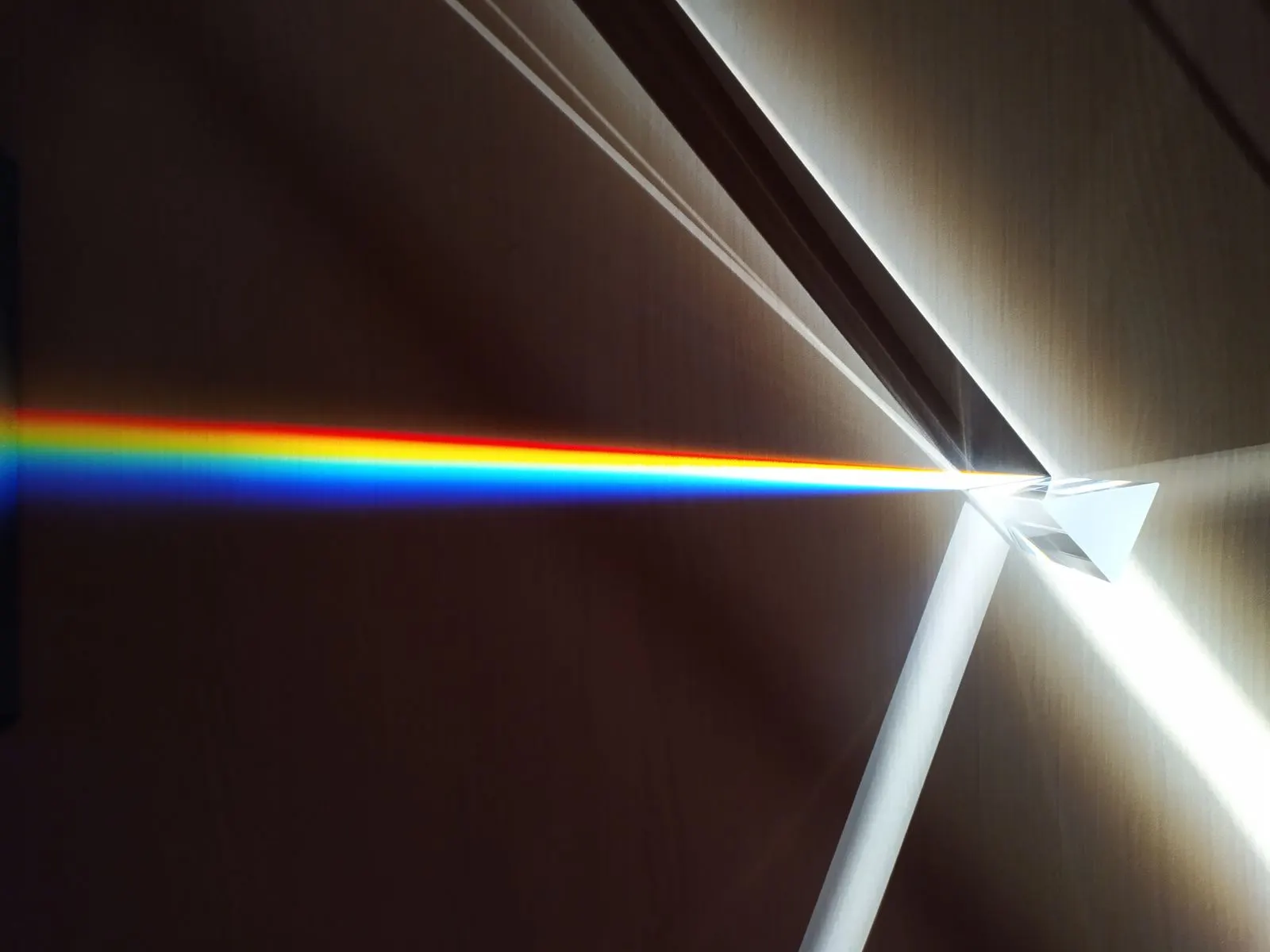
Sunlight reaching a car has three parts: ultraviolet, visible light and infrared. Visible light carries heat too. Put your hand on a black leather seat in the 2 p.m. sun: it burns partly because it absorbs that very light. A crystal-clear film with excellent infrared rejection still lets most visible light through, and that heat still gets into the car.
There is one more thing few sellers mention: the IRR measurement band is not standardized. A 3M comparison guide notes IRR as infrared in the 900 to 1,000 nm band, measured on film not yet applied to glass. Other manufacturers may choose other bands. So 99% from brand A and 95% from brand B cannot be compared unless you know which stretch each one measures.
This is our reasoning: a manufacturer is entitled to choose a band where its film performs well, and that is not wrong, but the number is then no longer a common yardstick. To compare across brands, you need a common yardstick, which is TSER. Some sales sources also admit that a 95% IRR film may only reach a TSER of around 40 to 50%. A few careful analyses by installers in Vietnam reach a similar conclusion.
How should you read TSER correctly?
TSER gathers everything together, so it is the number closest to how the car actually feels inside. As a formula, one reference gives TSER as (1 minus SHGC) times 100%, where SHGC is the solar heat gain coefficient of the glazing system.
Three things to ask when you see a TSER figure.
At what VLT was it measured? A dark film almost always has a higher TSER than a light film in the same line, simply because it blocks more light. Comparing the TSER of a 5% code with a 70% code from another brand is the wrong comparison. Always compare at the same VLT.
On what glass was it measured? TSER measured on clear 3 mm glass differs from TSER on tinted car glass. A serious spec sheet states the test glass. If it does not, ask.
Where does the number come from? Who published it, and under what standard? A line reading "TSER 60%" with no notes is worth far less than a line that states the method.
That gives car owners a practical rule: make a small table with two columns for films of the same VLT, and note TSER, IRR and price. Pick the film with the higher TSER at a reasonable price. Do not get swept along by the biggest IRR number.
Is 99% UVR still a differentiator?
Barely. 99% UV blocking has become a mainstream standard, and many sources say it is not a metric that separates premium films. A brochure that makes "99% UV blocking" its main reason to buy is a brochure short of other reasons.
There is an interesting fact about glass position. A 2025 study of 34 cars found that windshields blocked an average of 99.25% of UVA, while driver's side windows averaged 88.78%, with some cars at only 65.22%. All of them blocked 100% of UVB.
What follows from that? Film makes a UV difference on the side windows, where the driver's left arm is exposed throughout a long drive, not on the windshield. If someone sells you windshield film mainly for UV blocking, they are selling you something the windshield already does.
Note: the study was done in the US on a small number of cars and does not represent cars in Vietnam.
Is darker film always cooler?
Not automatically.
Darkness only describes visible light. A cheap dyed film can be pitch dark and still stuffy, because it absorbs heat and then radiates it back into the cabin. A lighter film made with good material can block more energy. The differences between materials are covered in a separate article on ceramic and carbon.
That said, do not go too far the other way. Within the same film line and technology, a darker code usually does have a higher TSER than a lighter one. The saying "dark film is not cooler" only holds when comparing different technologies. Both halves are true, and sellers tend to mention only the half that favors what they are selling.
What can a handheld meter at the shop tell you?
The three-reading meters you often see at shops usually report VLT, UV and an infrared value. They are useful for two things: checking that a film matches its stated VLT, and quickly seeing how two pieces of film differ.
They do not give you TSER. Each meter also has its own infrared band. So an installer who puts the meter on the glass and reads out "99%" has not proven how cool the film is.
The heat lamp test is the same. An infrared heater emits strongly in the zone where the film blocks well, so the film looks very impressive. The test shows that the film really does block infrared, which is useful, but it is not a fair comparative measurement.
When can a spec sheet not save you?
Numbers measured in a lab do not guarantee your car will be as cool as you expect. There are a few things film cannot fix.
A black car parked all day in an open lot. The body and roof still soak up heat, and film only deals with what passes through the glass.
A car with a panoramic sunroof. If the shop does not film the roof glass, a large patch of sun still comes straight down on the heads of the people in the seats.
A car driven only a few kilometers a day in town and parked in a garage. Paying much more for a high-TSER film is usually not worth it for that kind of driving. A mainstream code is enough.
That is why we do not state any temperature reduction figure for your car. Nobody can do so honestly, because the result depends on the glass, the car color, how it is parked and when you drive.
What to ask at the shop
These five questions take two minutes and filter out most of the promises.
- What exactly is the film code? Will it be written on the warranty card?
- What is the TSER of this code, and on what glass was it measured?
- At this same VLT, what TSER do other codes in the shop have?
- In what wavelength band is the IRR figure measured?
- Will you measure the VLT for me again after installation?
For VEGO film, the VLT and warranty of each code are listed in the product catalog. The other numbers come from the spec sheet of each code; if you do not see them on the page, ask directly instead of guessing.
Next step
Choose the VLT for each window position first, then compare TSER within that group. See reference setups under automotive window film solutions. If you need the spec sheet for a code you are considering, call 0924.802.802 or send a request through the contact page.