If you want to know how to choose a tint shop, ask for the quote first. A shop that writes down the exact film code, every window, the warranty scope and the work included in the price is worth a visit. A shop that only gives a package name and a total is selling you a promise, not film.
Trouble usually shows up a few months later. The film edge on a side window starts to scratch, the rear windshield has a streak of bubbles, you call the shop and they say "that's the manufacturer's problem", and the manufacturer has no record of your name. Only then do you dig out the car pickup slip and see it just says "premium package, long-term warranty".
Why is it hard to know how to choose a tint shop?
Because when you pay, you can check almost nothing. The film is fresh, the glass is clean, the car has just been washed, and everything looks good. Quality only shows over time: does the color change, does the adhesive hold, do the edges lift. By the time you know, several sunny seasons have passed.
The cost of picking wrong is not just the film. Stripping old film costs extra labor, all the adhesive has to be cleaned off, the car spends another round at the shop, and then you pay for the new film. A rear windshield with defroster lines also needs a careful hand when stripping. Most of this trouble can be avoided with half an hour of questions before you put down a deposit.
One habit is worth guarding against: comparing shops by total price. Two quotes that both say "ceramic film, whole car" can be two different things, because some cheap shops call ordinary film ceramic. Comparing totals without knowing the film code is like comparing the price of two cars without knowing the model year.
What to ask before you book
The questions below need no technical knowledge. What matters is how they answer: whether the shop can explain specifically, or just keeps repeating "don't worry about it".
What is the exact film code, and will it be on the quote? This question filters out the most. Every genuine film has its own name. A shop reluctant to write the code wants to keep the option of swapping the product later.
Is there a spec sheet for this code? Look at TSER and VLT, and ask to compare two films at the same VLT. The reason is in the article on window film specifications. The shop does not need to know it by heart, just to be able to show you the document.
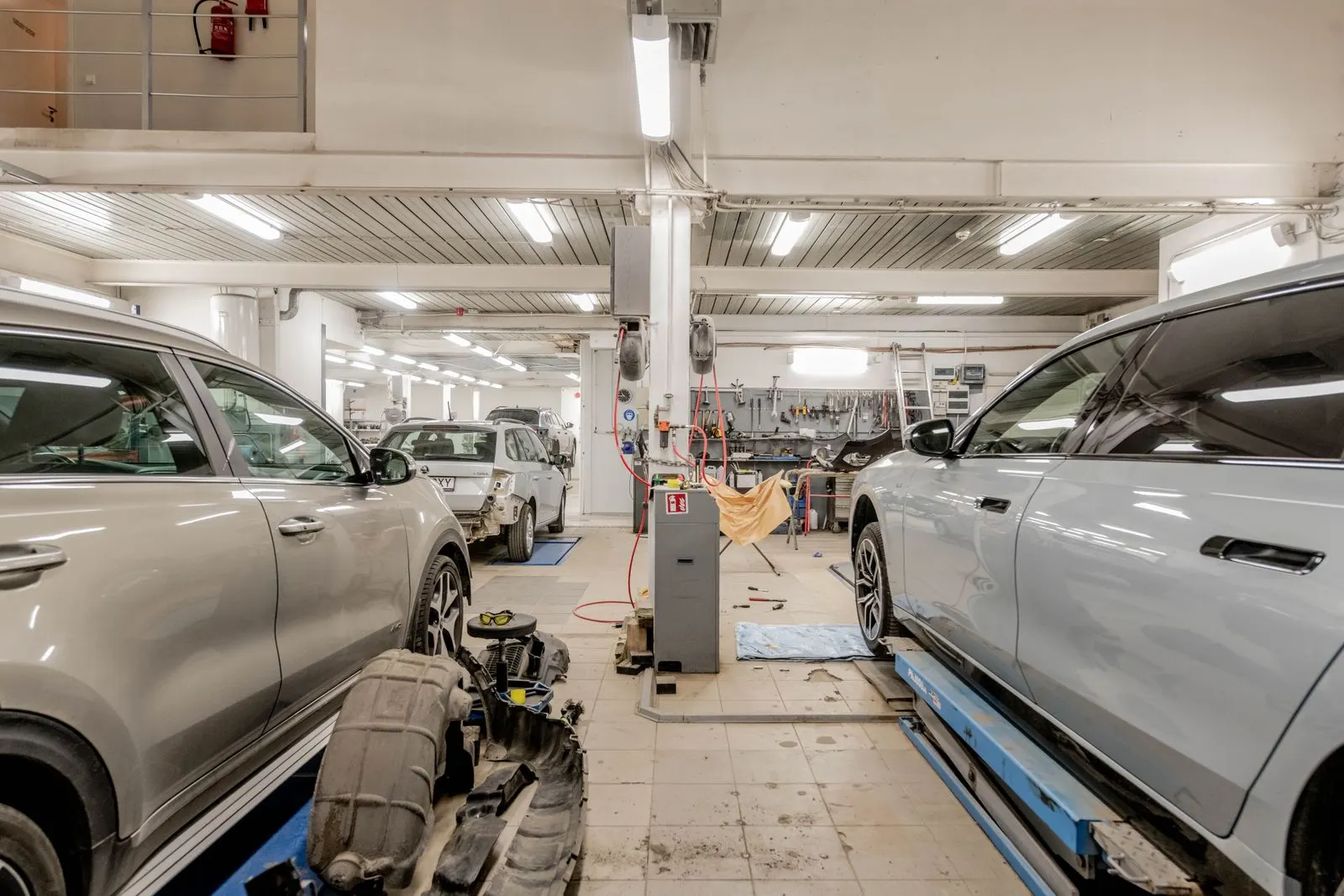
Where is it installed, and who does it? Ask to see the work area. Dust is film's enemy, so a drafty corner of a yard struggles to produce clean glass. It does not need to be a fancy room, just sheltered from wind, well lit, with a floor kept clean.
How is the film cut? Ask whether the film is pre-cut to a pattern for your model or cut directly on the glass. Either can be done well, but cutting on the glass means asking even more carefully about the blade and any scratch lines. The newer the car, the more you should ask.
What if the car has old film? Stripping old film and removing adhesive should be stated up front, with a separate price if needed.
How long until I get the car back, and will you measure again? A careful shop usually tells you clearly how long not to roll the windows down, how to wipe the glass, and is happy to measure the VLT again in front of you. Aftercare from there is in the article on what to do after tinting.
The full process, from choosing the film type to the installation steps, is in the article on how to choose film and the installation steps.
How to read the quote
The quote is the most valuable document in the whole process, because it is what the shop is willing to put on paper. Spoken promises can be generous; written words tend to be more cautious. We see this as a cheap but effective test: that view is experience reasoned from the logic of accountability, not survey data.
| Item on the quote | Good sign | Ask again |
|---|---|---|
| Film name | A specific code | Only "premium package" |
| Windows | Each window, with VLT | "Whole car" |
| Specs | VLT, TSER from the spec sheet | Only "blocks 99%" |
| Warranty | Period, scope, where to claim | A verbal "lifetime warranty" |
| Work included | States clearly what is included and extra | Extras billed later |
| Payment | Receipt, installation date written | No paperwork |
The table is a relative assessment to help screen quickly, not a verdict on the quality of any specific shop.
One row landing in the right column does not mean the shop is bad; sometimes they are just used to abbreviating. Ask them to fill it in. What to watch is the reaction: does the shop fix it straight away, or start talking in circles?
On price, do not pick the lowest number or the highest. Bring the quotes to the same conditions first: the same code or the same VLT and TSER, the same number of windows, the same warranty. Only then does the remaining gap mean anything.
What should the contract and warranty cover?
Window tint rarely comes with a thick contract, and it does not need one. A clear slip is enough, as long as it answers a few questions when something goes wrong.
Article 30 of Vietnam's 2023 Law on Consumer Rights Protection gives an easy framework to remember, at a general level. A business that offers a warranty must publish its policy, including the start date, duration, scope, how it is carried out and the cases not covered. When it accepts a warranty claim, the business must give the consumer a document or equivalent. If it authorizes or hires someone else to do the work, that business is still responsible to you.
For you, that leads to three very practical steps. Get the warranty policy before you pay, do not wait until the film peels. Keep the paperwork, including photos of the slip and appointment messages. When you take the car in for a warranty claim, get a dated receipt. This article only covers general knowledge, not legal advice; for a specific case, read the current legal text.
The slip should include these lines: owner's name, license plate, film code for each window, installation date, warranty period, where to claim, and what is not covered.
There is one gap people often miss. As we understand it, your warranty has two layers: the film and the installation. Film changing color or adhesive failing over a large area is a product issue. Trapped dust, scratches or edges cut too short are a workmanship issue. Many disputes start in the gap between these two layers, when the shop blames the manufacturer and vice versa. Asking up front who covers which part is how you close that gap, and the answer should be on paper.
Signs you should switch shops
None of the points below proves a shop is sloppy, but each is enough reason to go look at one more place.
Selling with the heat lamp before asking how you drive. A quote that changes every time you haggle, without the product changing. Pushing for a deposit right now because "the promotion ends today". Flatly claiming this film is definitely within the rules: that is something you should check yourself against current local regulations. Not letting you see the installation bay or a car being worked on.
On the other hand, some good signs cost nothing: the shop tells you that you do not need dark film, suggests dropping one window, or says straight out that the film they sell cannot save a car with a large sunroof. A seller willing to leave money on the table usually wants to see you again.
Next step
Get quotes from two places, with the same VLT for the same windows, then put them side by side using the table above. If you need a place to install or want to ask which film suits you, leave a request on VEGO's contact page.