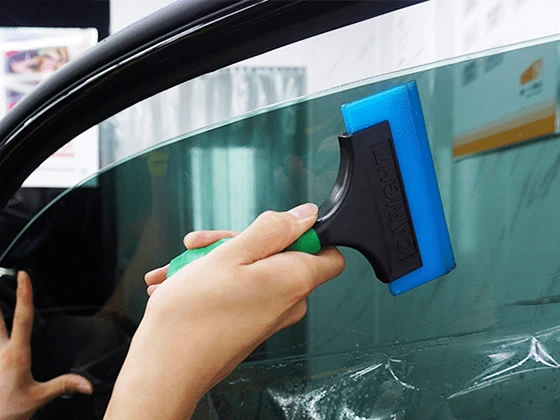
Window tint aftercare starts with leaving the windows alone for exactly as many hours as the installer tells you, usually about 48 to 72 hours, and not worrying about a few hazy water marks in the first days. After one to two weeks, when the film has dried, check it again. Any bubble still there at that point, especially one with a speck of dust, is a bubble that means going back to the shop.
You pick up the car this afternoon, drive out of the garage into the sun tomorrow morning, and from an angle the glass looks speckled, as if there were mist inside. Many owners call the shop right away. Most of the time this is normal. But real defects can hide in among it, and a real defect left for a few months is very hard to claim.
After window film goes on, how long before you can lower the windows?
Everyone asks this, and the numbers do not match. VnExpress reports that installers usually advise not lowering the windows for about the first 48 hours, and some brands require 72 hours. Elsewhere you will see 24 hours.
We advise following the shop that did your car, and choosing the longer period if you are unsure. The adhesive needs time for all the water to escape. That time depends on the weather: a damp, humid spell in northern Vietnam takes far longer than a sunny noon in Saigon. Do not try to save a day. The reason is simple: glass lowered while the adhesive is still wet can push up the edge of the film, and an edge that has lifted is a ruined edge.
During this time, avoid a few more small things. Do not stick anything on the film or peel anything off it, including an ETC tag. Do not wipe the inside of the glass. If the car has to be washed, say clearly that the inside must not be sprayed or wiped, and do not let the washer press hard on the edge of the glass.
Telling water bubbles from air bubbles
Every article is vague on this, yet it is what owners need most.
| What you see | What it usually is | What to do |
|---|---|---|
| Hazy marks, speckled like mist, first day | Water not yet dry | Wait, and leave the car in the sun if convenient |
| Small bubbles with no particle, shrinking | Remaining water | Wait one to two weeks |
| Bubble with a speck of dust or a hair in the middle | Dust trapped under the film | Tell the shop, do not fix it yourself |
| Bubble unchanged after a few weeks | Adhesive not bonded, trapped air | Tell the shop |
| Film edge lifting, with a gap | Installation defect or impact | Tell the shop early |
| Large bubble, swelling and spreading after many years | Adhesive degradation | Check the warranty |
| Turning purple, fading | Color layer degrading, often in dyed film | Check the warranty or replace |
The timeframes are only estimates. Shops say different things, from a few days to a few weeks, and the weather shifts the figures further.
A small tip for checking: stand outside the car and look at the glass at an angle in sunlight, then look out from the inside in the evening under streetlights. Installation defects usually show clearly when you look at an angle in low light.
A common mistake is to prick a bubble with a needle or push it out with a card. That leaves marks that cannot be repaired and may cost you warranty eligibility. Leave it to the installer; a bubble with dust in it often means redoing the whole pane.
How do you clean filmed glass?
The film side is inside the car, which means it is the side you wipe when the glass fogs up.
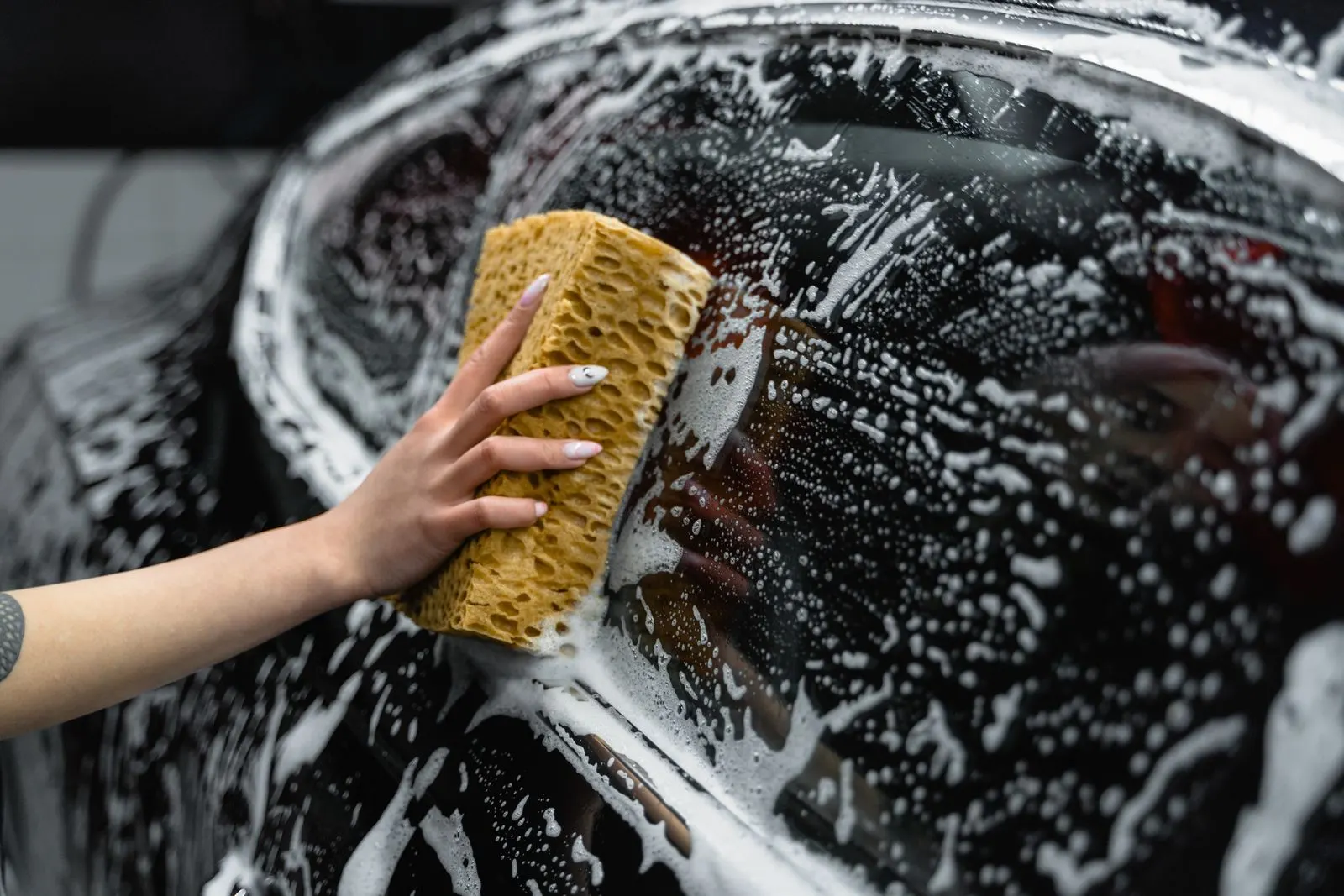
Use a soft, clean, slightly damp fiber cloth. Wipe gently in one direction. If you need a cleaner, choose a neutral one. Avoid anything with ammonia and anything with abrasive particles. Do not use a razor blade on the film side.
Wait until the drying period is over before wiping it directly. A cloth with grit from the door area scratches film more than people think, so wash your cloths separately.
On a rear window with defroster lines, be gentle and follow the direction of the lines. When replacing film, use an experienced installer, because careless peeling can damage the defroster lines.
Three things that age film early
Seat belts. A seat belt buckle whipping against the side window on release can chip the film, a tiny thing that happens every day.
Sharp objects at the glass edge. Rings, toys and keys hit the film. Holders and suction pads stuck on the film and then removed also leave marks.
All-day parking in the sun. Not because the film cannot take it, but because constant heat is a long-term test of the adhesive and color layer. This is not a reason to worry. It is just that film on a car parked outdoors gets more exposure than on a car parked in a garage, and the warranty terms should be read carefully.
How long before you should replace the film?
There is no single number. A warranty period is not a lifespan, only the period when someone is responsible. Film can work well after the warranty ends, and poor film can fail early.
Go by the signs instead of counting years. Four signs it is worth replacing: the film turns purple or blotchy, bubbles swell and spread, edges peel in a way that cannot be fixed, and the windshield is hazier at night than before because the film is heavily scratched. The last sign is the easiest to miss, because it comes on slowly and your eyes adjust. Comparing with another car of the same age at night is a simple way to check.
Removing old film is a job for an installer. Old film tends to leave adhesive behind and can damage the defroster lines on the rear window, and the removal labor is sometimes not cheap. When you ask for a replacement quote, ask whether it includes removal and adhesive cleanup. If you plan to sell the car, old purple film is also the first thing a buyer sees.
Small things that can cost you the film
After window film goes on, people who end up refilming their glass often do so not because the film is weak but because of a habit. Sticking strong-adhesive stickers on the film, adding a suction phone holder to the glass, letting sprays or perfume get on the film, or wiping off fog with a shirt sleeve that has a metal button. Each is minor, but doing it every day leaves marks.
If the car has a vehicle inspection sticker or an ETC tag on the glass, ask the installer to handle that spot from the start, and do not peel the old sticker off and restick it on the film yourself.
What should you keep so you do not lose the warranty?
The warranty card is what owners lose most often, and the warranty runs for many years.
On the day you pick up the car, open the warranty lookup page and check the film code, license plate and installation date. Take photos of the windows when newly filmed, so you have something to compare with later. Keep the quote and invoice.
For VEGO film, the period is based on the film code on the card, from 5 to 10 years depending on the code in the system catalog. If you sell the car, ask the dealer about transferring the card to the new owner, because we have not seen a general rule on this published.
One slightly unwelcome view: if the film was damaged by something you did, tell the shop straight. Refilming one pane is usually simpler than arguing about the warranty, and a good shop will offer a fair price to someone who is honest.
If you are reading about the installation process for the first time, see the article on the installation steps and the process section under automotive window film solutions.
If you have already found a defect
Take photos from an angle where the defect shows clearly, note the date you found it, and tell the installer first. If VEGO film has a problem, also send your warranty card number through the support center or call 0924.802.802.