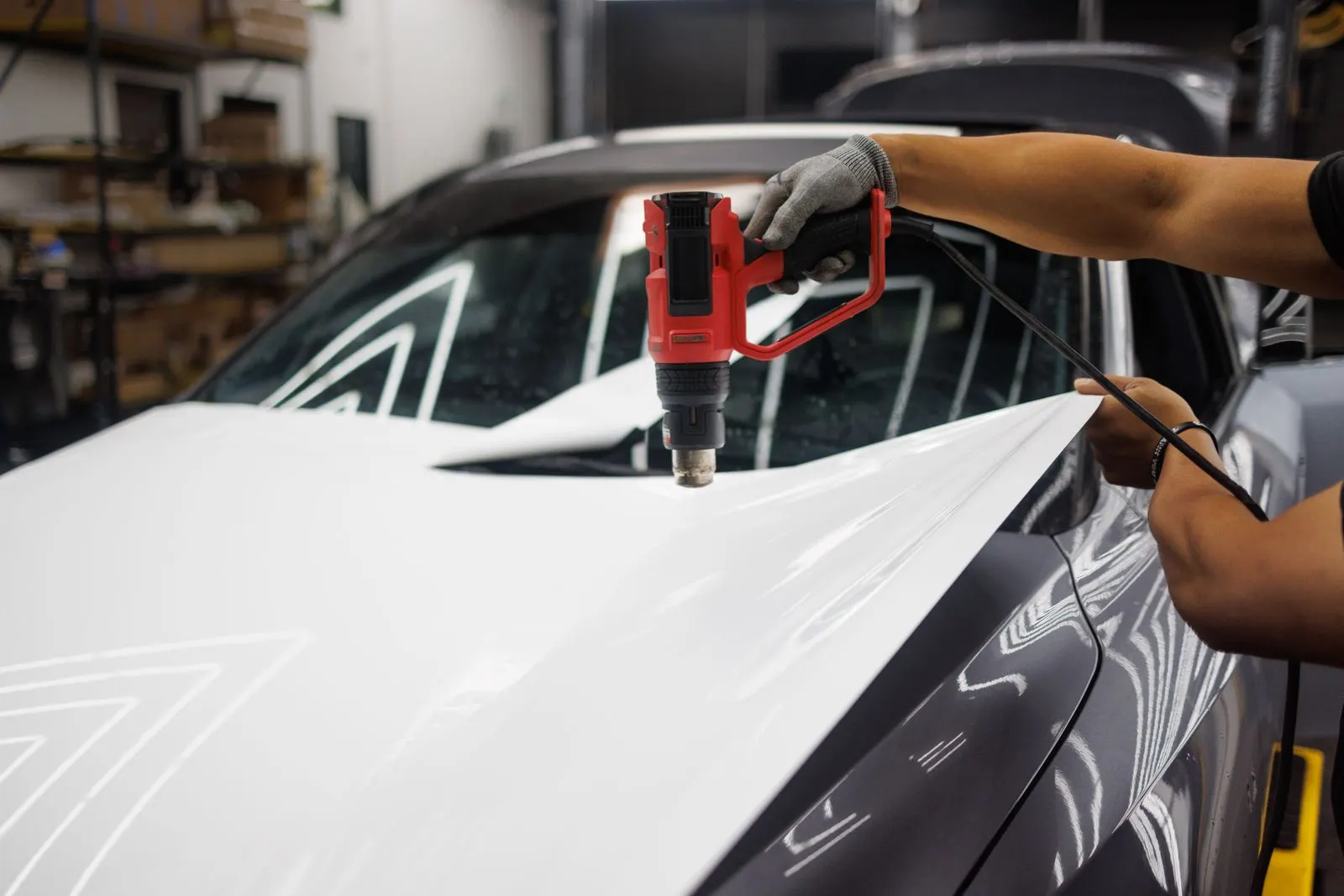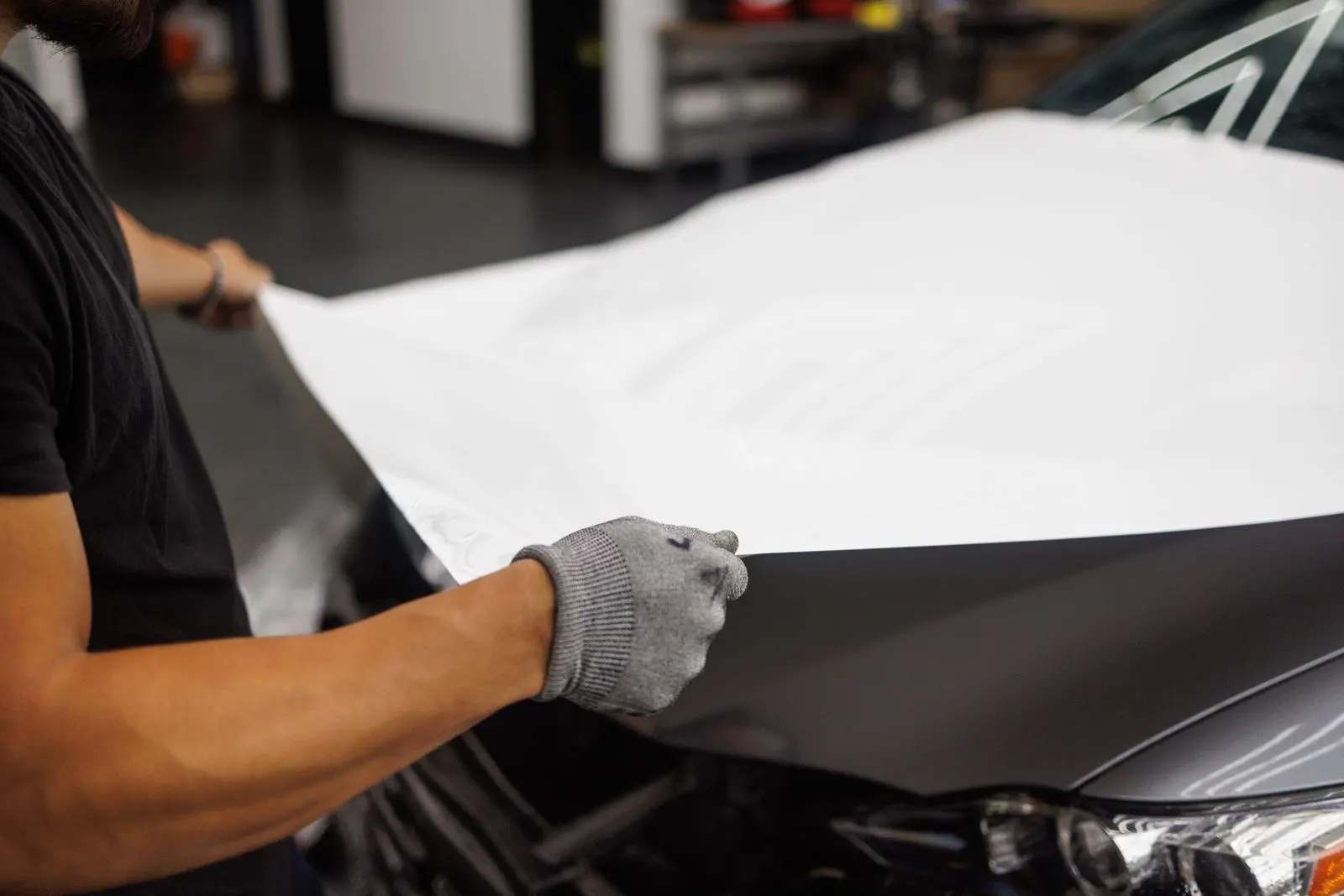
Whether paint protection film (PPF) makes sense on a new car depends on three things: which roads you drive, how long you keep the car, and how easily its paint scratches. A car that often uses expressways or roads under construction, or that you plan to keep for a long time, is worth covering, at least on the front end. A car driven little, parked in a garage and replaced after two or three years often does not need it.
A small stone flicks up from the wheel of a truck ahead, with a faint "tick" on the hood. That is the moment many owners start thinking about PPF, usually after the chip has already appeared on a car that still has its new smell.
The cost is not small either. An article on VTC News gives a range of VND 15 to 60 million for a full car. The figure varies with the film, the car and the shop. Because the money is significant, it is worth working out carefully.
What does PPF really protect?
PPF is a thick clear film, usually 6.5 to 10 mil, applied over the paint. It takes the small impacts in place of the paint.
What it handles well: small stone chips, swirl marks from washing, fingernail scratches in the door handle cups, and bird droppings and tree sap if wiped off early. On film with a self-healing top-coat, light scratches can fade when heated.
What it cannot do, and sellers tend to play down:
It does not prevent dents. A hard enough hit still dents the body; the film only keeps the paint from chipping as badly.
It does not heal tears. Scrape a wall hard enough to puncture the film and that panel has to be replaced.
It does not fix paint that is already damaged. Applied over poorly repaired or peeling paint, it may well pull the paint off when removed.
It also needs care. You still have to wash the car properly, and the film edges still collect dirt if the installation is poor.
The automotive paint protection film page lists clearly what to expect and what not to misunderstand.
How do TPU, TPH and PVC differ?
If you remember only one thing: ask whether the film is TPU. Many cheap quotes use the word "PPF" for other materials.
| Material | Commonly described properties | Risks | Use when |
|---|---|---|---|
| TPU | Elastic, conforms easily to curves, has a self-healing top-coat | High price, quality varies by brand | Long-term paint protection |
| TPH | Cheaper, soft like flexible plastic | Sources conflict on self-healing, less durable | Low budget, short period of use |
| PVC | Cheap, stiffer | Prone to yellowing and cracking | Better suited to decorative decals than paint protection |
This table is compiled from PPF manufacturers' documents, not independent tests, so read it as a general guide. Notably, TPU itself splits into two branches. Industry material distinguishes aliphatic TPU from aromatic TPU, with the aromatic type yellowing more easily. So "TPU film" is not enough; ask which kind of TPU.
That is why, after two years, some PPF is still crystal clear and some is as yellow as tea, even though both were once called TPU.
Is PPF worth it for your car? Which cars justify it and which do not
This part is our own reasoning, based on working out how much your money actually protects.
| How the car is used | Suggestion | Why |
|---|---|---|
| Many intercity and expressway trips, black car | Front end, consider full body | Lots of stone chips, scratches show easily on dark paint |
| Luxury car, special paint, expensive to repaint | Full body | A repaint never quite matches the original paint |
| Family car in town, kept for a long time | High-scuff areas: door handle cups, door edges, bumpers, mirrors | Spend little, cover the spots that get damaged |
| Parked in a garage, a few kilometers a day | Not needed, ceramic coating or regular detailing | Low risk, hard to recoup the cost |
| Car with many scratches, repainted | Fix the paint first, reconsider later | Film over defects only preserves the defects |
| Commercial car, replaced after two or three years | Usually not worth it | Hard to recoup the investment on sale |
There is a comparison owners should do themselves: divide the PPF quote by the number of years you plan to keep the car, then set that beside the cost of repainting the hood and front bumper once at your usual garage. If you keep the car only two years and drive in town, the figure usually does not favor PPF. If you keep it six years or more and drive long distances, that is different.
When to install? Does installing early make a difference?
Installing early has a real benefit, because the paint is still clean. A UK article argues that each week of driving adds more dirt and fine scratches that must be dealt with before installation. Film preserves the surface beneath it, defects included.
But do not let the line "a new car must be covered right away" rush you into signing a contract at the dealership. A new car that has been driven for a few weeks still takes film well, as long as it is lightly polished the right way. Take your time choosing a shop. Some new cars also have paint defects from the factory, and a good shop will check under lights and point them out before installation.
Can a ceramic coating replace PPF?
The two are often compared, but they do different jobs. A ceramic coating is a very thin layer that makes the car glossy and easy to wash. It cannot stop stone chips. PPF has real thickness to take impacts. If your worry is dull paint and dirt, a ceramic coating covers most of it. If your worry is chips on the hood, only PPF can do that.
Many owners use both: PPF on the front end, ceramic coating on the rest. Ask the shop whether the coating is compatible with the film's top-coat before doing it.
The installer matters more than the roll of film
With PPF, good film badly installed still gives a poor result. Watch three things: whether the film edges are wrapped or stop exposed, whether there are cut lines on the paint, and the tension in curved areas.
On cutting, ask whether the shop uses a machine-cut pattern or cuts with a blade on the car. Hand cutting on the body without enough experience can leave marks in the paint, which you only discover when the film comes off years later. Overstretching in curved areas also thins the film and makes it prone to lifting.
Ask for photos of cars the shop has done, and look closely at the hood edge, the mirrors and the door handles. Many problems sit in those corners. A photo of a whole gleaming car says very little; a close-up of the film edge shows the workmanship.
How to choose Ox-Shield
VEGO's Ox-Shield PPF comes in four grades, A+, S+, SS and SSS, each in several thicknesses: from 6.5 to 10 mil for A+, SS and SSS, and up to 9.5 mil for S+. S+ and SSS also offer a gloss black or matte option if you want to change the surface. See the table under PPF Series. The warranty period follows the warranty card of each product.
Thicker film takes impacts better but is harder to install on curved areas, so the thickest is not necessarily the right buy. If your goal also includes changing the car's color, read more about color-change TPU PPF.
Before you sign the quote
Ask exactly three questions: which type of TPU the film is, machine cut or blade cut, and how the film edges are finished. If you want to compare Ox-Shield grades for your car and driving style, send your details through the contact page or call 0924.802.802.