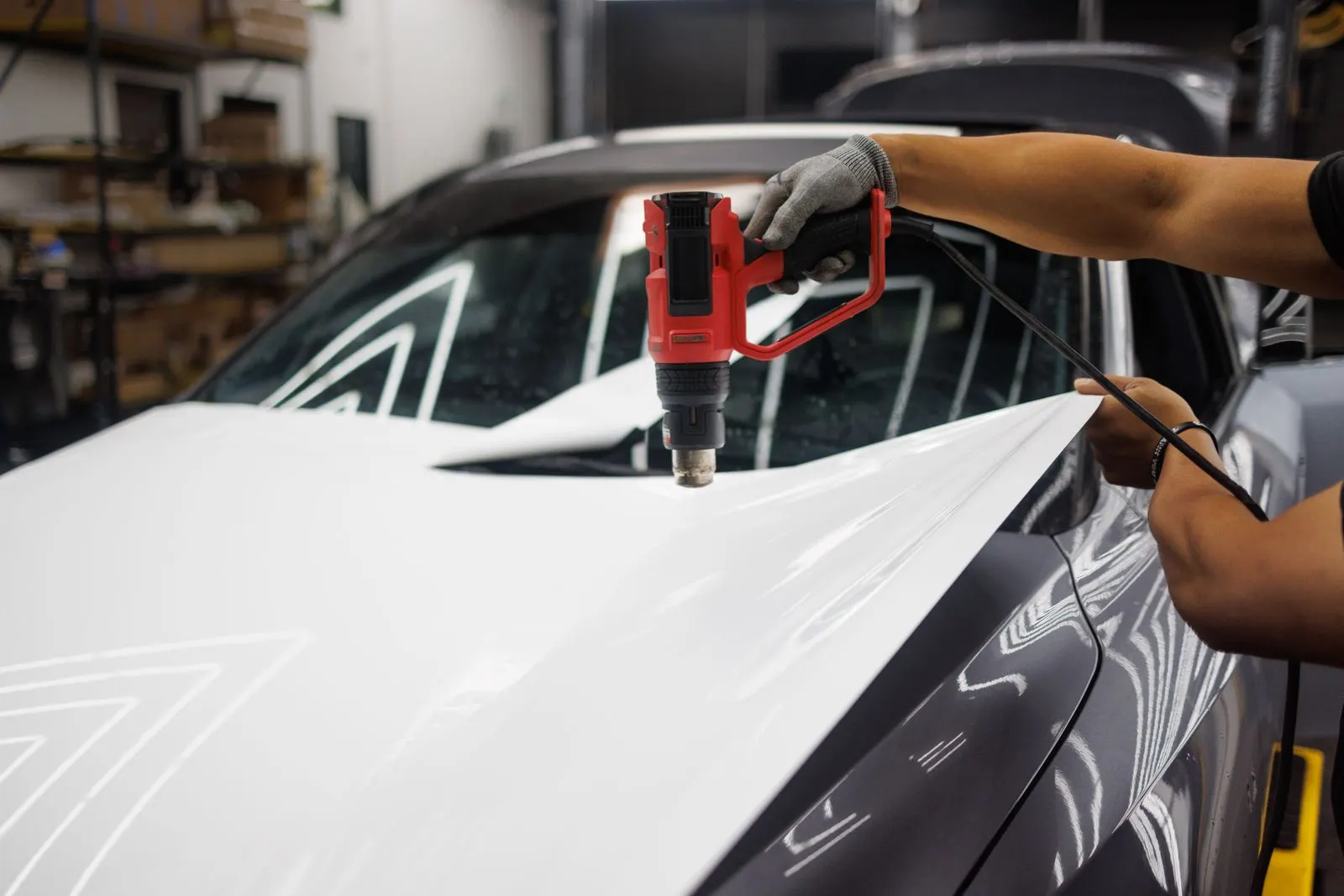
So, what is PPF? It is paint protection film: a clear, multi-layer plastic film with a TPU body, applied over the paint to take stone chips and small scratches instead of the paint. It does not block sun like window film, and it does not make a car indestructible. Before you look at a quote, you only need to know three things: what layers the film has, what kind of TPU it uses, and how the numbers on the sheet were measured.
PPF quotes tend to read the same: TPU, self-healing, anti-yellowing, top coat, so many mils. Every word sounds fine, and owners struggle to tell apart two quotes that are quite far apart in price. This article takes those words one at a time. Whether a new car is worth filming is a separate question, covered in our article on PPF for a new car.
One limit up front. Most PPF data comes from sellers' own documents. We have not found independent tests comparing PPF lines against each other, so this article says a lot about construction and very little about which product beats which.
What is PPF when you look at its layers?
A sheet of PPF is not one uniform piece of plastic. The general description of PPF says today's automotive films have several layers, thickness is usually measured in mils, and the top layer can heal light scratches.
To see real numbers, look at an actual example. The table below comes from the technical data sheet of one PPF line from an international brand, 2024 edition.
| Layer, outside in | What it does | Example thickness |
|---|---|---|
| Top coat | Gloss or matte surface, stain resistance, self-healing | 15 µm |
| TPU | Film body, elastic, absorbs impact | 130 µm |
| Acrylic adhesive | Sticks to the paint, must come off cleanly later | 28 µm |
| Release liner | Protects the adhesive, peeled off during install | 75 µm, not counted in film thickness |
The numbers are from one sheet and do not represent every PPF. The "what it does" column is a general description, not a measurement.
The sheet lists a total thickness of 173 µm, or 6.8 mil, with a tolerance of ± 10%, excluding the release liner and the surface protection film.
This table allows one calculation worth noticing, and it is our own reasoning: 130 divided by 173 is about 75%, so three quarters of the thickness is TPU. The top coat, 15 divided by 173, is only about 9%. Yet most sales talk is about that 9% layer: self-healing, stain resistance, deep gloss. That is not wrong, since it is the part the buyer sees every day. But the impact cushioning sits in a layer that gets mentioned less, and whether the edges lift or the paint gets pulled when the film comes off depends on the adhesive, a layer almost nobody mentions.
What is TPU, and how do aromatic and aliphatic differ?
TPU is thermoplastic polyurethane. What makes it the choice for the film body is elasticity: it stretches to wrap mirror caps, front bumpers and hood edges, and stays flexible afterwards. PPF makers' documents usually put TPU next to two other materials: PVC is stiffer and prone to yellowing and cracking; TPH is cheaper, and sources contradict each other on whether it self-heals. These comparisons all come from sellers, so read them as a general direction.
What few quotes mention is that "TPU" splits further. According to the reference on polyurethane, polyurethane made from aromatic isocyanates tends to darken under light, while aliphatic isocyanates are used when color stability matters. PPF sellers shorten this to aromatic TPU and aliphatic TPU.
"Aromatic" and "aliphatic" here are chemistry terms. They have nothing to do with smell or softness. So the question worth asking at the shop is short: what type of TPU is this film, and does the sheet say so? If the seller cannot answer, you have learned something else about that quote.
What does a self-healing top coat actually do?
This layer deals with very shallow scratches. Swirl marks from washing, fingernail marks in the door handle cups, light rubs: with heat, from sun or warm water, the elastic polymer recovers and the mark fades.
Highway stone chips are different. A stone with enough force leaves a dent or a hole in the film, and no top coat can patch that by itself. The film did its job, sacrificing itself for the paint, but the mark stays until that piece of film is replaced. The damage is much lighter than a stone hitting the paint directly, but do not let the word "self-healing" convince you the film will never show a mark.
The top coat also sets how the surface feels: gloss, matte, how slick it is when you wash it. If you plan to change the color or the finish, see color-change TPU PPF. Do not use harsh cleaners or a coating you have not checked on the top coat, because this layer is thin and it is the first thing chemicals hit.
Why does PPF turn yellow?
The material cause was covered above: aromatic TPU darkens under light. Beyond that, the causes often cited, such as the adhesive, grime left on for a long time and how the car is cared for, all come from sellers, and we have not found independent measurements that separate how much each one contributes.
So treat "anti-yellowing" as a commitment, not a guaranteed physical property. Its value lies in who takes responsibility if the film discolors, where that is written and for how long. A promise on a flyer with no warranty terms behind it does not tell you anything yet.
Discoloration shows more on white and light-colored cars than on dark ones. If your car is white, the questions about TPU type and yellowing terms are worth pressing even harder.
Mils, µm and the thickness number trap
1 mil equals 25.4 µm. The sheet above converts 173 µm to 6.8 mil, which checks out. Two points to remember when you compare thickness.
First, which layers the number counts. The sheet above says clearly that it excludes the 75 µm release liner. Try adding it: 173 plus 75 is 248 µm, about 9.8 mil. This is an illustrative calculation of ours, not a claim that anyone labels film that way. It just shows that the same sheet of film can produce two very different numbers if the sheet does not say how it counts.
Second, tolerance. At ± 10%, a 173 µm film can fall anywhere from 156 to 190 µm. Two films half a mil apart on paper may not really differ.
Thicker film adds cushioning, but it is harder to stretch over tight curves, so it also depends on the installer's hands. Thickness gets a deeper treatment in a separate article; here, just remember there is no thickness that is right for every car.
Which numbers on a PPF data sheet should you trust?
Read the test method column closely and you find an interesting detail. On that same sheet, adhesion, gloss, tensile strength and elongation all cite ASTM standards, while heat aging, water immersion and stain resistance list the method as "Internal", meaning in-house testing, with a result of pass and no number. The sheet itself also says the performance information is for guidance only.
So here is our take. The parts you could measure again have a standard. The part you care about most, how long the film will last, is mostly tested by the maker itself. Window film has shared specs to compare against, such as TSER and VLT, but for PPF we have not found a similar common yardstick for durability.
Because of that, when you compare two PPFs, a sensible order is: the written warranty terms, the shop doing the install, and only then the data sheet. The numbers help you rule things out, not rank them.
Next step
See the areas of a car that usually get protected on the automotive paint protection film page. If you have a quote in hand and are not sure what kind of film it is, you can send it to the VEGO team through the contact page and we will explain it line by line.