Full car tint or just the windshield: if the budget allows and the car drives a lot in the sun, a full car tint still makes more sense, because the sun gets in through every pane. If you can only afford part of it, do not default to the windshield. Tint the pane that bothers you most, usually the side window where the sun hits you, then the windshield, and last the rear sides and rear windshield.
That runs against how many people think. The windshield is the biggest pane and sits right in front of you, so everyone assumes it comes first. Then at 3 p.m. on the highway, windshield tinted, your arm by the window is still burning.
Which panes does the sun come through?
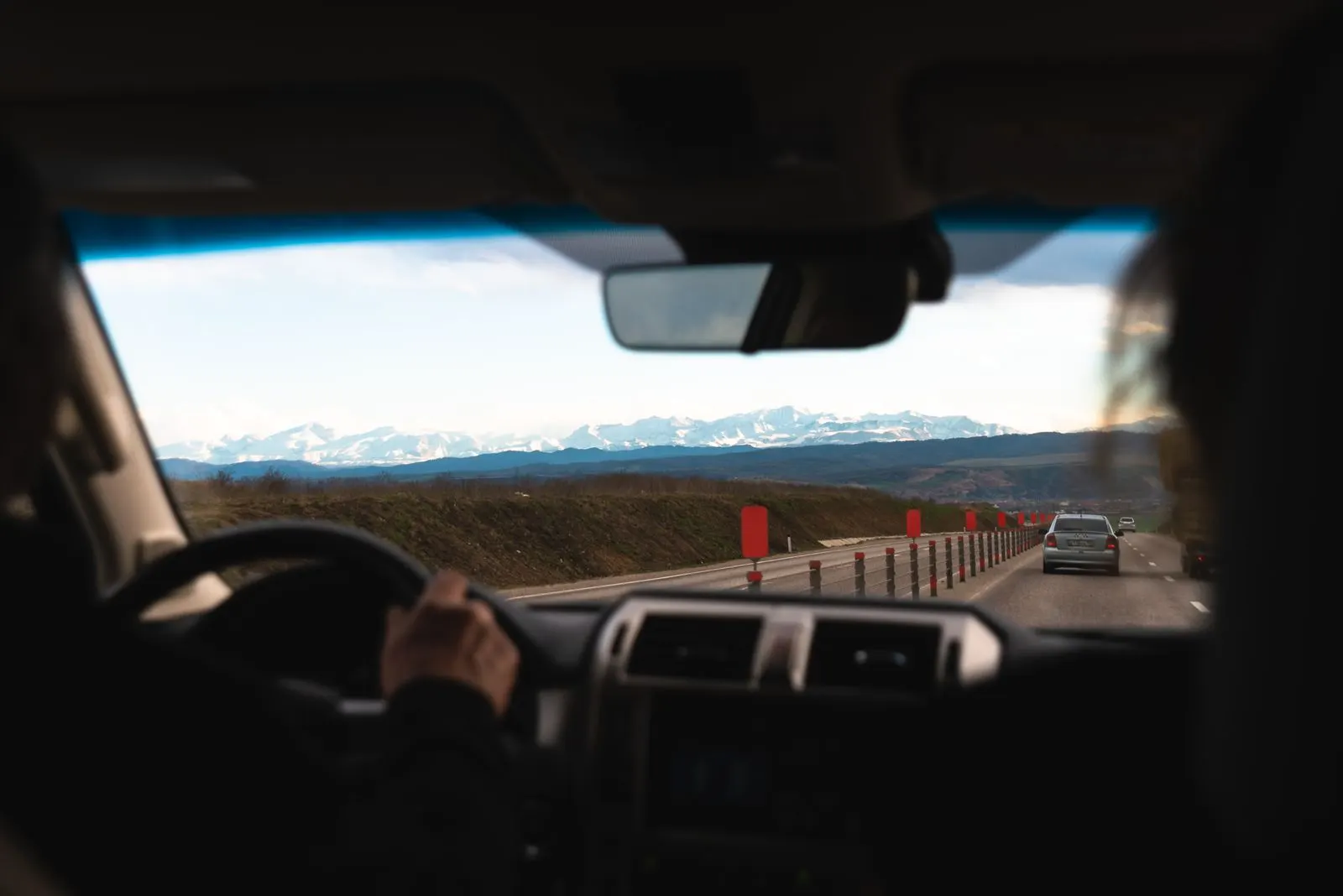
One number comes up a lot in windshield discussions. A 2013 NREL study recorded more than 40% of the heat entering a car coming through the windshield. That number is real, and it says the windshield is not a pane you can take lightly.
But read its scope correctly. The experiment used an energy-control windshield, not film, on cars in the US. And "heat entering the car" is a figure for the whole cabin, not how it feels on your skin. It also means the opposite: the rest of the heat comes in some other way, including the other windows.
For how it feels on your body, position matters as much as area. Direct sun through the side windows onto your arms, shoulders and face is something you feel immediately. The windshield may take in more heat in total, but that heat lands on the dashboard first and radiates from there. This is our judgment from the mechanism, not a measurement: the pane that takes in the most heat is not necessarily the one that makes you most uncomfortable.
UV leans heavily toward the side windows. A 2025 study of 34 cars from model years 2015 to 2025 measured windshields blocking an average of 99.25% of UVA, while driver's side windows averaged 88.78%, ranging from 65.22 to 100% depending on the car. All of them blocked 100% of UVB. The study was done in the US with a small number of cars, so do not apply it directly to yours. The main point is still clear: if UV is the goal, the side windows are where film makes a difference, not the windshield.
A simple deduction from those two numbers: the UVA getting through the windshield averages 0.75%, through door glass 11.22%, about 15 times as much. This only compares two averages and does not account for exposure time or sun angle.
The priority order for each pane
| Order | Position | Why | When to move it up |
|---|---|---|---|
| 1 | Side window where the sun hits you | Direct sun on skin, UV | You often drive the same direction in the sun |
| 2 | Windshield | Whole-cabin heat, glare | Expressway driving, hot dashboard |
| 3 | Other front side window | Front passenger, matching color | Someone often sits in front |
| 4 | Rear sides | Rear passengers, privacy | Small children, carrying passengers |
| 5 | Rear windshield, sunroof | Remaining sun | Car with a large sunroof |
The order is a relative assessment based on our reasoning, not a measured result. Different cars and driving patterns can change it.
You can change the order. A car on long east-west routes, with the sun in front in the morning and again in the afternoon, is right to put the windshield first. A family car with a baby can put the rear sides ahead of even the passenger side. What the table is saying is: order the panes for a reason, instead of tinting by package.
On the windshield, visibility comes before coolness. Choose light film, try a sample after dark, and check current local regulations. Older drivers should be more careful: a 2022 review of earlier work on drivers over 65 found they report more glare and recover from glare more slowly. How to choose the VLT for each position is in the article on window tint VLT.
Also remember that car glass often comes tinted. VLT after tinting is roughly the product of the glass and the film, for example 70% film on 80% glass leaves about 56%.
How to split the budget by percentage
Below are three hypothetical splits. We use percentages of the budget you have, not prices, because prices vary by car and by shop, and we have no reliable price source. This is an illustration, not a price list.
| Hypothetical split | Windshield | Two front sides | Rear sides | Rear windshield |
|---|---|---|---|---|
| Driver first | 40% | 40% | 10% | 10% |
| Family first | 35% | 30% | 25% | 10% |
| Even split by package | 25% | 25% | 25% | 25% |
The ratios are assumptions to illustrate the thinking, not real prices and not a recommendation for every car.
The last row is there for comparison. Many full car packages sell one film for every pane, so the money is spread almost evenly by area. There, the rear windshield gets the same treatment as the windshield, even though the two panes need different things.
In practical terms: for the same budget, you can choose better film for the panes that must stay light and mid-range film for the panes that are already dark. The total may not change, but the money sits in the right places. To compare two codes for one pane, put the TSER of two films with the same VLT side by side, as the article on window film specifications explains.
Full car tint or just the windshield: when should you do the whole car?
The car drives a lot in the sun. The sun changes direction with the road, and every pane takes its share at some point. Leave one side bare and that side stays hot.
A new car you plan to keep. One visit for the whole car is tidier than several trips to the shop, the color matches better, and the paperwork covers one code clearly.
You often carry people in the back. Tinting only the front means the rear passengers, often the people you worry about most, get the least protection.
You need privacy. Most privacy needs sit at the rear sides and rear windshield, the last panes in the order above. For a car carrying small children or with belongings left inside, move them up.
You want the car to look uniform. This is an aesthetic reason, but a real one. A light windshield with darker sides is a common setup and still looks good; front and rear side windows in completely different tones make the car look odd.
When is tinting only part of the car enough?
Not every car needs the full set.
The car already has dark rear glass. Some cars come with dark rear glass from the factory. The two front sides and the windshield are worth treating first, although factory dark glass does not necessarily reject heat well.
Basement parking, short trips only. The front sides may be all you need.
Lots of night driving. Leaving the windshield clear is sometimes the right call, especially for older drivers. Not tinting the windshield is a choice, not an oversight.
The car is about to be sold. Only treat what still bothers you for the time you have left, and do not invest in the rest.
Tinting in stages is fine; there is nothing wrong with it. The first round does the most uncomfortable pane, a later round does the rest. What you need to do is write down the film code and the shop, so the later round does not end up mismatched. Ask for prices on both options before you decide.
There is one thing we do not recommend: putting a dark film on the windshield just because it came in the package. The package may be a little cheaper, but you will be looking at the road through that choice every night.
Next step
This week, notice which pane bothers you most on your usual route, then set your own order using the table above. See reference setups under car window film solutions, or pick a film for each pane in the VEGO product catalog.