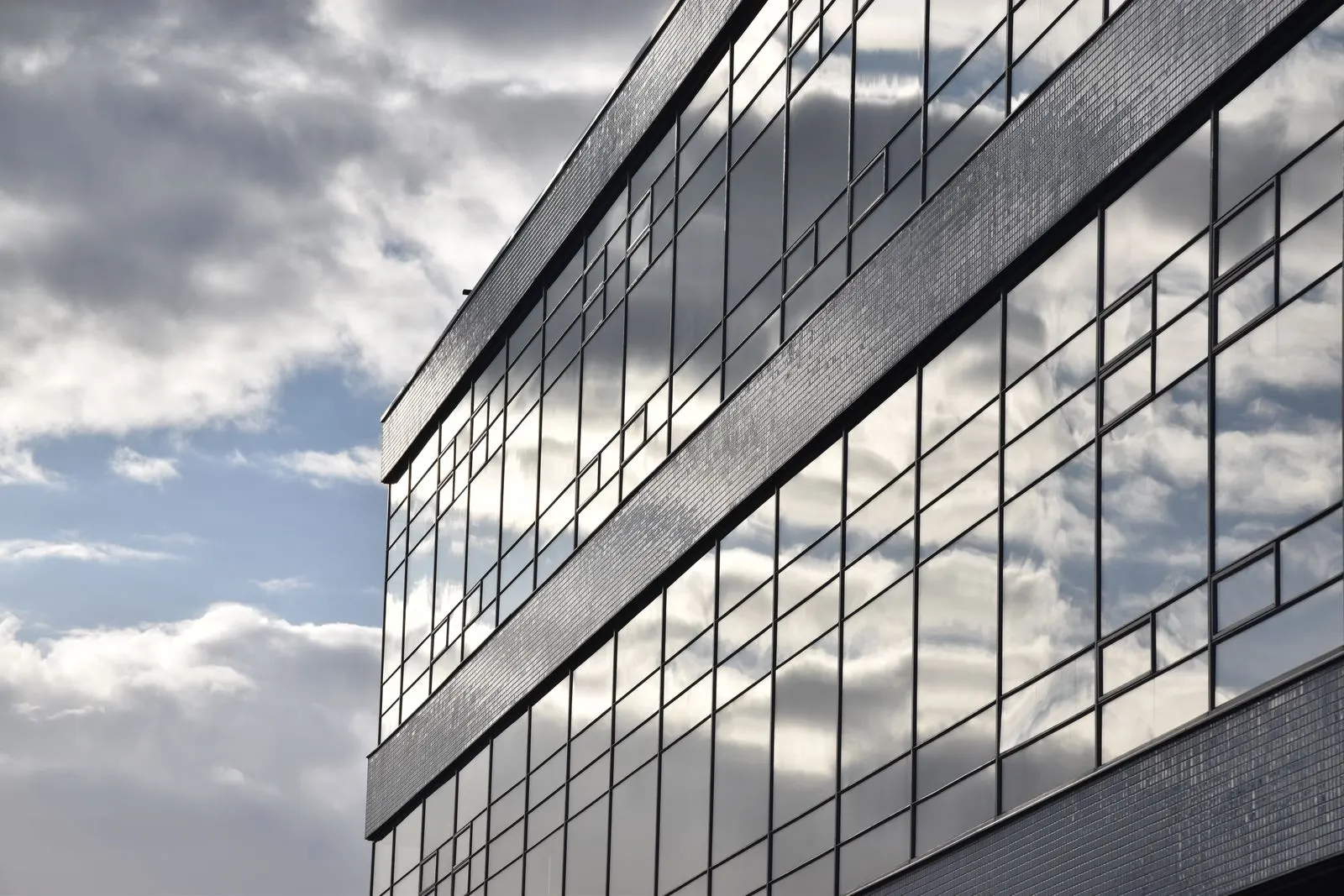
What is VLR? It is the visible light reflectance of a film: the percentage of visible light bounced back off its surface. It has two sides. Exterior VLR decides how shiny the car looks. Interior VLR decides whether the glass throws reflections back into your eyes. One number cannot stand in for the other. Spec sheets usually print only the exterior figure, while the side that bothers drivers at night is the inside.
A story car owners know well: the film goes on, the car looks great in daylight, and the next evening the center screen shows up as a ghost on the side window, right where you look for the right-hand mirror. Nobody at the shop mentioned it, because it was still light out when you looked at samples.
What is visible light reflectance, and why are there two numbers?
VLR stands for Visible Light Reflected. Light hitting tinted glass goes three ways: some passes through, some is reflected, some is absorbed. VLT counts what passes through. VLR counts what bounces back.
Each side of the glass and film system has its own reflectance. That is why one international brand's spec splits it into two lines, exterior reflectance and interior reflectance, each measured separately on 6 mm clear glass. If the manufacturer bothers to split them, you shouldn't lump them together.
| Exterior VLR | Interior VLR | |
|---|---|---|
| Who sees it | People outside the car | People inside the car |
| What it affects | Shiny look, privacy | Reflections, especially at night |
| Usually on the spec sheet? | Usually | Often missing |
| Most noticeable | Daytime, sunshine | Night, cabin lights on |
This is a relative guide for quick reading, not measured data.
What exterior VLR do spec sheets list?
Take two documents from one international brand: a 2022 data sheet for two films at 19% and 29% VLT, plus a 2021 document for a 77% VLT film. Exterior VLR is 7%, 7% and 10% respectively.
Two things stand out.
The lightest film has the highest exterior VLR. Intuition says dark film is the shiny one, but here it is the opposite, which shows that "dark" and "shiny" are separate axes. A dark dyed film does not look mirrored because it absorbs light instead of reflecting it. A reflective film can be fairly light and still shine.
The second is a small calculation we worked out ourselves. Since light only goes three ways, what is left after subtracting VLT and VLR is roughly what the glass and film hold on to:
| Film | VLT | Exterior VLR | Remainder (estimate) |
|---|---|---|---|
| Dark film | 19% | 7% | about 74% |
| Medium film | 29% | 7% | about 64% |
| Light film | 77% | 10% | about 13% |
This is only an estimate, because it uses exterior reflectance for light coming from outside, on 6 mm clear glass, not car glass. But the message is clear: a dark film with low VLR does not make the light disappear. The light gets trapped in the film, the film warms up, and some of that heat radiates into the car. Low VLR looks good, but it is not proof of a cool car. That is why our overview of window film specifications puts TSER first.
Why do you see reflections in the cabin at night?
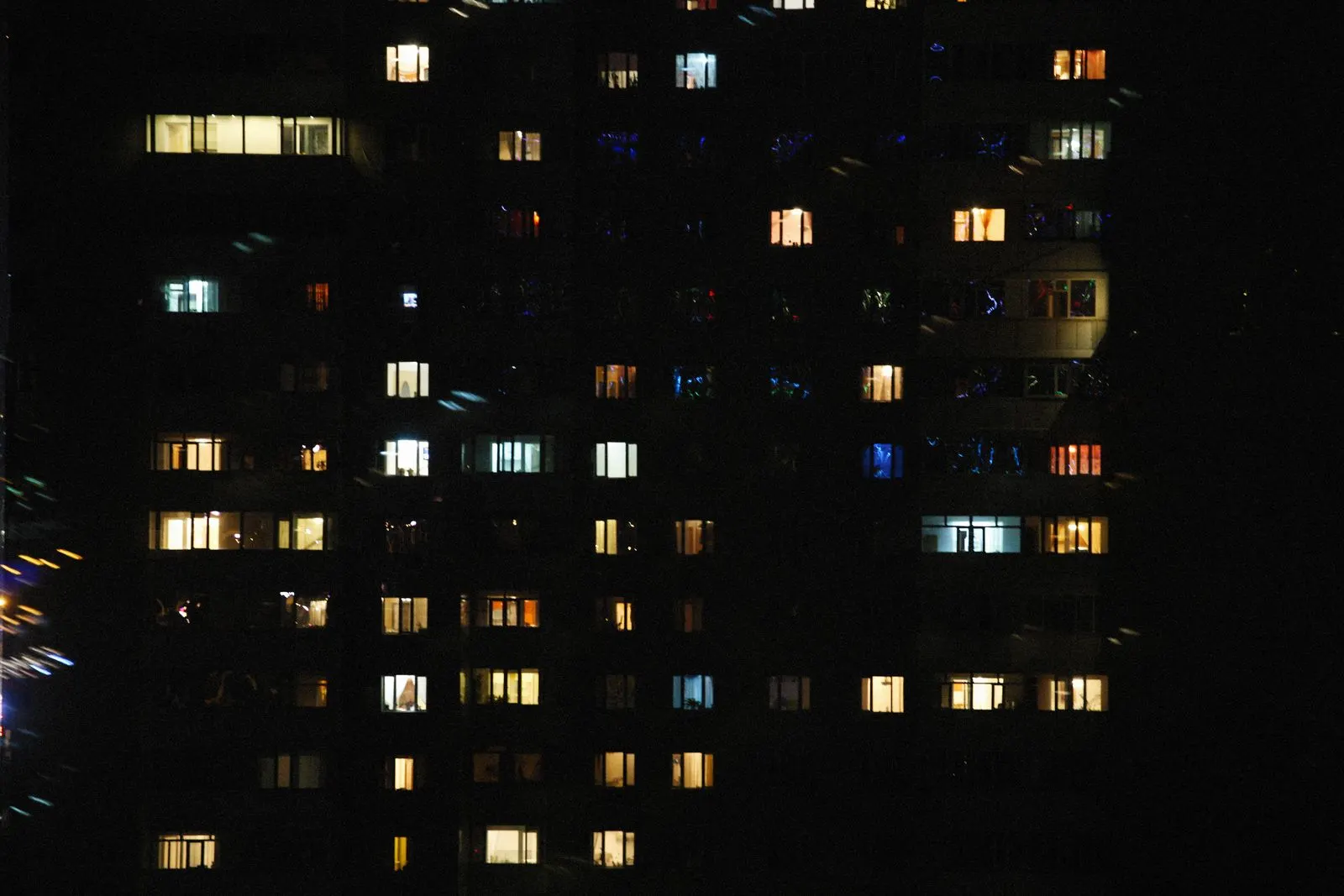
All glass reflects a little light from both faces. In daytime you don't see those reflections, because the light coming in from outside is far stronger and drowns them out. At night the balance flips.
The mechanism is the same as one-way film on home windows: it all depends on which side is brighter. At night, with the lights on inside, people outside can see in, while people inside only see their own reflection in the glass. A car works the same way: this is a comparison of mechanisms, and we have no measurements of our own for car cabins. The center screen, dashboard lights and dome light come on, light bounces off the inner surface, and the side window turns into a dim mirror.
Dark film makes this worse in a way that is easy to understand, even though the spec sheet won't show it: less outside light comes in, while the reflection from the inner surface stays the same. So even if interior VLR isn't high, the ratio between reflection and the view outside gets worse. This is reasoning from the mechanism, not measured data.
Here is a point sales copy rarely makes: cabin reflections depend on both VLT and screen brightness, and VLR is only part of it. So picking a film with low interior VLR but going very dark won't necessarily get rid of the reflections.
The fixes are simple: put the screen in night mode or turn it down, switch off the dome light while driving, and set the mirrors at the right angle. If your car has a big screen and you want dark side windows, test before tinting the whole car.
What does night glare have to do with VLR?
Two things that are easy to confuse.
Glare from oncoming headlights is strong light passing through the glass, often made worse by scattering from dirty or scratched glass. Reflections are cabin light bouncing back. The first relates to VLT and how clean the glass is. The second relates to interior VLR.
When glare bothers them, many people think a darker film will help. Dark film does soften the harshness, but it also cuts what you need to see on the road: pedestrians in dark clothes, potholes, signs. For drivers over 65, a 2022 review of earlier studies found that glare from oncoming cars causes more discomfort, recovery from glare is slower, and reading road signs at night is harder. This group should favor lighter glass and not trade visibility for short-term eye comfort.
Cleaning the inside of the glass often improves night glare more than people expect, and it costs nothing in film.
Mirror finish and privacy: which trade-offs are real?
Many owners want to stop people seeing in. There are three ways to do it, each with a price.
Dark film keeps the car private by letting little light through, no mirror needed. The price is night visibility, and you have to check current local regulations for each window position.
Reflective film keeps the car private in daytime because the outside acts like a mirror. The price is a shiny look not everyone likes, plus a risk of signal problems if the coating contains metal. When the cabin lights are on at night, that privacy drops off sharply, exactly because of the reversal described above.
Light film with low VLR hides almost nothing, but in return you get good night visibility. If you want privacy, use shades on the rear seats when needed, especially in a family car with kids sleeping in the back.
If your car does a lot of night driving, we lean toward giving up a bit of privacy to keep visibility. That is an opinion, but the reason is simple: seeing the road clearly is about safety, while privacy is about comfort.
Choosing darkness by window position is covered in our article on choosing VLT, so we won't repeat it here.
How do you check VLR before tinting?
When the spec sheet isn't enough, use your eyes, but use them properly.
Look at samples outdoors, not under the shop lights. A film that looks soft under fluorescent light can turn properly shiny when the sun hits it at an angle. Stand a few steps back from the car and look at the paint color and the sample together.
Ask for a small test patch on a side window and wait until dark, if the shop agrees. Sit in the driver's seat, turn on the screen and dashboard lights, and look over at the right-hand mirror. Those five minutes are worth more than any table of numbers.
Ask two clear questions: does this film's spec sheet list interior VLR, and does the coating contain metal? Getting no answer to the first is normal, since many spec sheets don't list it. In that case, the night test is the thing to trust.
If the spec sheet lists both sides, compare films with the same VLT. As with TSER, comparing VLR between films of different darkness easily leads to the wrong conclusion.
Next steps
Before you choose, write down whether you drive at night a lot and whether you want the car to look shiny. Those two answers rule out half the options. See the options on the car window tint solutions page, or send your car model and driving habits to VEGO through the contact page.