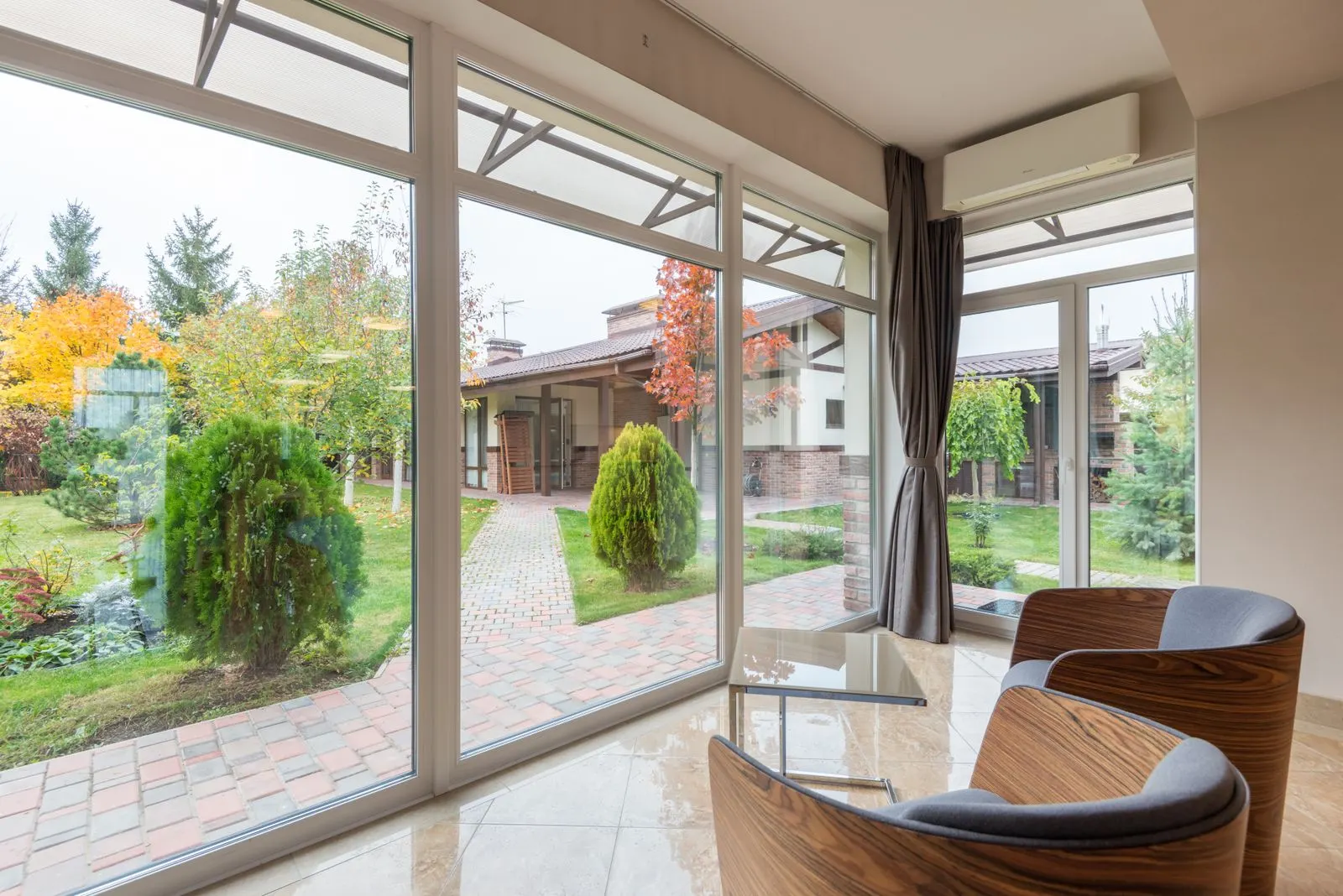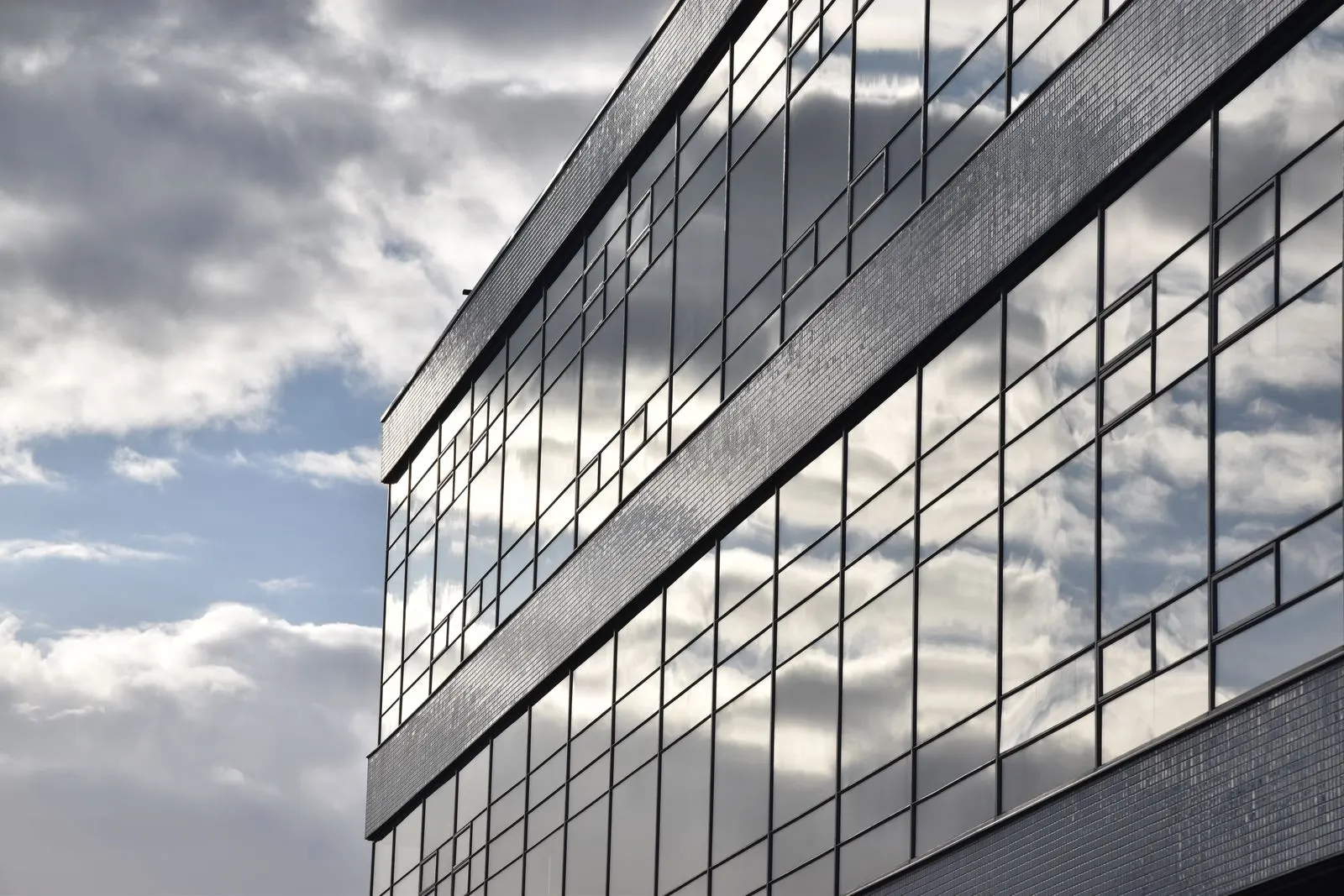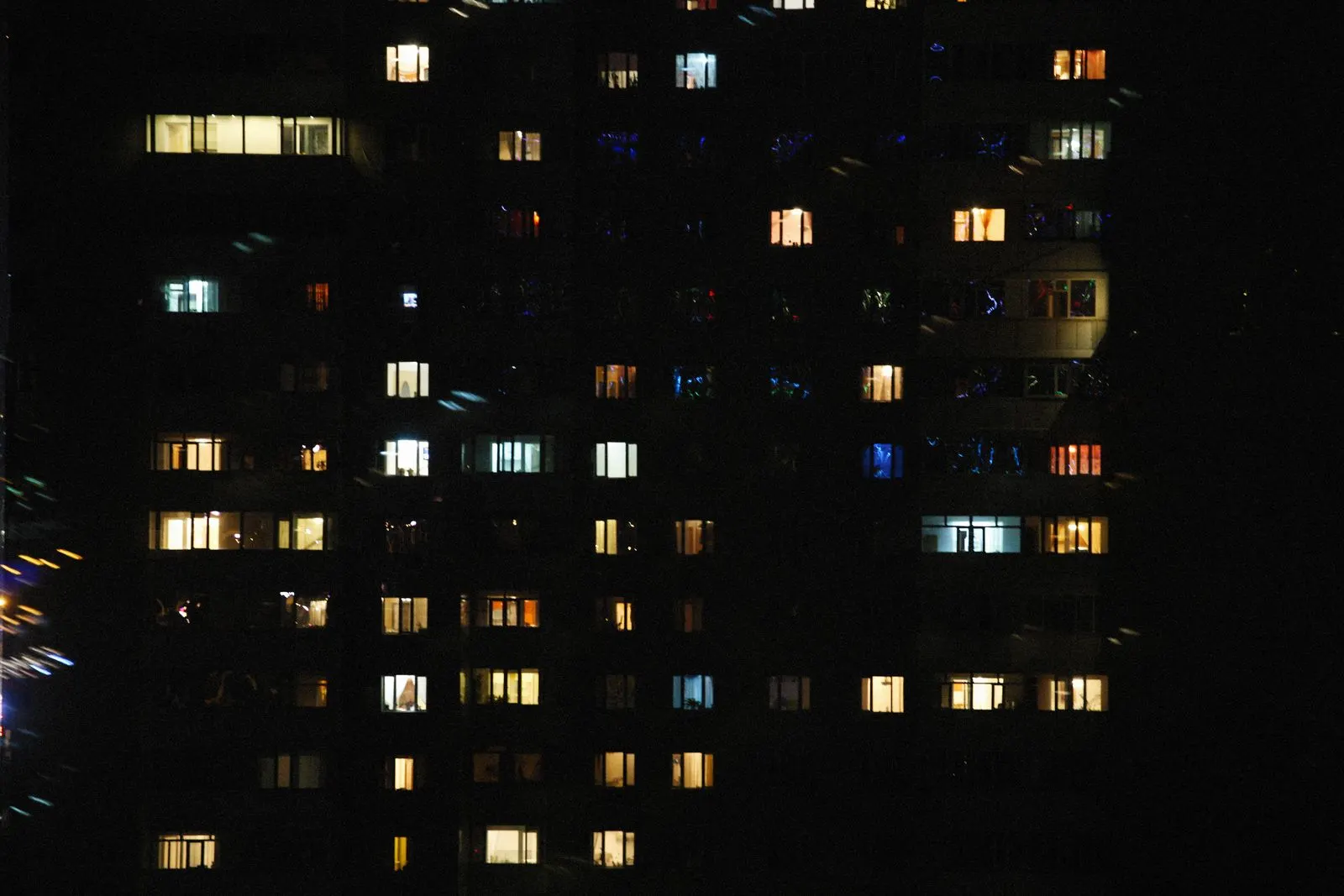
One-way window film at night stops being private: once it is dark and the lights are on inside, people outside can see in, while people inside only see their own reflection in the glass. This is not a film defect. It is how this type of film works: it only hides the darker side. If you need privacy in the evening, you still need curtains, or a switch to frosted film.
A common case is a house on the street with reflective film. For the first week the owner loves it: by day, people outside only see silver glass, and from inside the street is perfectly clear. Then one evening they step out to take the trash, turn around, and see the whole living room lit up like a TV screen.
Why does one-way window film at night reverse?
"One-way" is a sales name. No material lets light through in one direction and blocks it in the other.
Reflective film has a thin layer that reflects part of the light and lets the rest through. The principle of a one-way mirror is the same: light passes equally in both directions, and the difference comes from the light on each side. The eye of someone standing in front of the glass receives two things at once: the image from behind the glass coming through, and the image from their own side bouncing back. Whichever is stronger overpowers the other.
In the daytime it is far brighter outside than inside. A passerby looking in sees the reflection of the street, and the scene inside is too faint to show. After dark the balance flips, because now the bright side is your room. One film dealer also admits this is a physical limit, not a product defect. When a sales document says that, buyers should believe it.
A worked example: when do you see through, and when do you see a mirror?
The calculation below is ours, to illustrate the mechanism. Suppose the film transmits 20% of light and reflects 40%, simplified as the same on both sides. Brightness is in made-up units, not measurements. For someone outside looking in, the see-through part equals indoor brightness times 20%, and the reflection equals outdoor brightness times 40%.
| Situation | Outside | Inside | See-through | Reflection |
|---|---|---|---|---|
| Sunny day | 1,000 | 10 | 2 | 400 |
| Overcast day, room lights on | 100 | 20 | 4 | 40 |
| Night, room lights dim | 1 | 2 | 0.4 | 0.4 |
| Night, room lights bright | 1 | 20 | 4 | 0.4 |
In the first row, the reflection is 200 times the see-through part, so the film really is "one-way". In the last row, the see-through part is 10 times the reflection, and people on the street can see into the room.
Now switch to a darker film that transmits 10% with the same reflection. In the last row, the see-through part drops to 2 against 0.4, still 5 times as much. A darker film only dims the view of the room. It does not tip the balance back.
From this calculation we draw a conclusion the flyer does not mention: what decides privacy is the brightness ratio between the two sides, not the number on the film sample. To improve the evening, the cheapest fix is to lower the lighting in the room near the glass, not to switch to a darker film. The numbers in the table are assumptions, so take the trend, not the figures.
The third row is worth a look too. With the room lights dim, the two parts are equal and the inside scene blends into the reflection. Not fully private, but hard for people outside to see clearly.
What will you see from inside at night?
Few people are warned about the downside of evenings. Apply the same calculation to someone in the room looking out, and the reflection of the room overpowers the view outdoors. The glass turns into a big black mirror, clearly showing the lamps, yourself and the TV.
For a living room looking onto a garden, or a high-floor apartment, that is a real loss: you paid for the night view, then covered it up yourself. Turning off some lights near the window lets you see out more clearly, and also makes it harder for people outside to see in. Two benefits from one move.
The stronger the reflective layer, the clearer the mirror. So a film chosen on the basis of "the more private by day the better" will usually give you a more annoying evening. That trade-off needs weighing from the start, especially for a room you mostly use after work.
What gives privacy in the evening?
There is no single answer for every room.
| Approach | Evening privacy | View out | Trade-off |
|---|---|---|---|
| Curtains, roller blinds | High when fully closed | Lost when closed | You have to remember to close them, not tight to the glass |
| Full-pane frosted film | High, blurry shapes visible | Almost none | View lost all day |
| Frosted band at eye level | Fair, depends on position | Keeps the top and bottom | Changes the look of the glass |
| Reflective film plus curtains | Film by day, curtains at night | Good by day, poor at night | Two costs, mirror effect at night |
| Dim the lights near the window | Low to moderate | Better | Not enough for bedrooms or bathrooms |
The table above is a relative assessment, compiled from industry documents and the mechanism described above. Individual products vary in quality.
Curtains are still the surest answer, and something to have before you buy film. A small detail that is easy to miss: do not hang curtains tight against filmed glass, because the fabric holds heat in and pushes it back into the pane. With ordinary glass, that is one factor that raises thermal stress.
Frosted film works on a completely different mechanism. It diffuses light, so the image is wiped out on both sides no matter which is brighter. Bathrooms, windows that look straight into the neighbor's house and glass walls of dressing rooms are good fits. In exchange you lose the view out. Someone right next to the glass can often still make out figures moving about, so do not expect it to behave like a wall.
A frosted band at eye level is the compromise: people sitting inside still see the sky above, while the line of sight from outside is cut at the height that matters most. Set the band height by the eye level of someone standing outside; a house right on the street and a house set back from it are different. Try it with tracing paper before ordering film.
Is it reliably one-way in the daytime?
That has conditions too. The second row of the table shows that on an overcast day with the room lights on, the balance has narrowed a lot compared with a sunny day. Late in the afternoon, as it gets darker outside, it narrows further.
Glass that sits in shade is also weaker, because the outside is darker at that spot. Someone standing right at the glass, cupping their hands to block the light and pressing their face to it, will be able to see in, because they have just made a dark zone in front of their eyes. This is our inference from the mechanism, not a published test. So on a ground floor facing the street, do not treat film as absolute security for a safe or documents.
When is reflective film still worth installing?
When what you need is in the daytime. A home office used only during working hours, a ground-floor living room that passersby glance into, a mezzanine with a window looking straight onto the street: one-way film does that job well, and can also cut sun and glare if it is a solar control film. The Efficient Windows Collaborative page on window film explains the reflection and absorption mechanism, and advises having a qualified person check the location, type and condition of the windows before filming.
Do not choose it as the main privacy solution for a bedroom on the street or a bathroom. Those are the places you need privacy most at exactly the time the film is weakest.
Before you decide, there are three more things to weigh. Silver glass in the daytime can glare into the house opposite. Apartment buildings usually have shared rules about the exterior, so ask building management and check current local regulations. And reflective film is still solar control film, so the glass type still has to be checked first, as covered in the article on window film for west-facing windows. On the film's spec sheet, reflectance may be listed separately for the exterior and interior faces; how to read the numbers on the sheet is in our overview of window film specifications.
Try it before you buy
Tonight, turn the lights on as usual, then go outside and look in. Wherever you can see most clearly is where film will not help, and where you need curtains or a frosted band. See more options on the architectural film page, or send a photo of your glass through the contact page and VEGO WINDOWFILM will suggest an approach for each room.