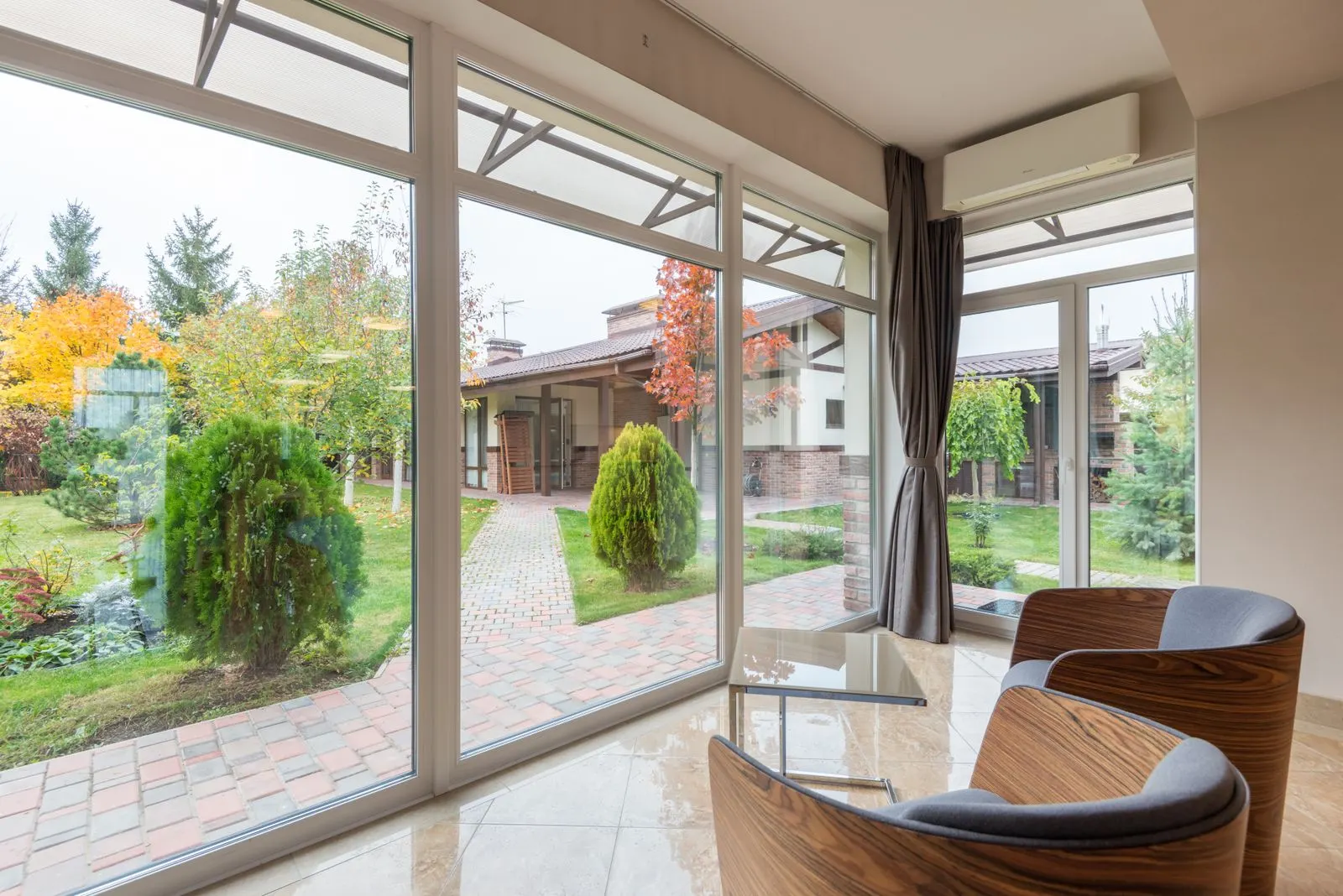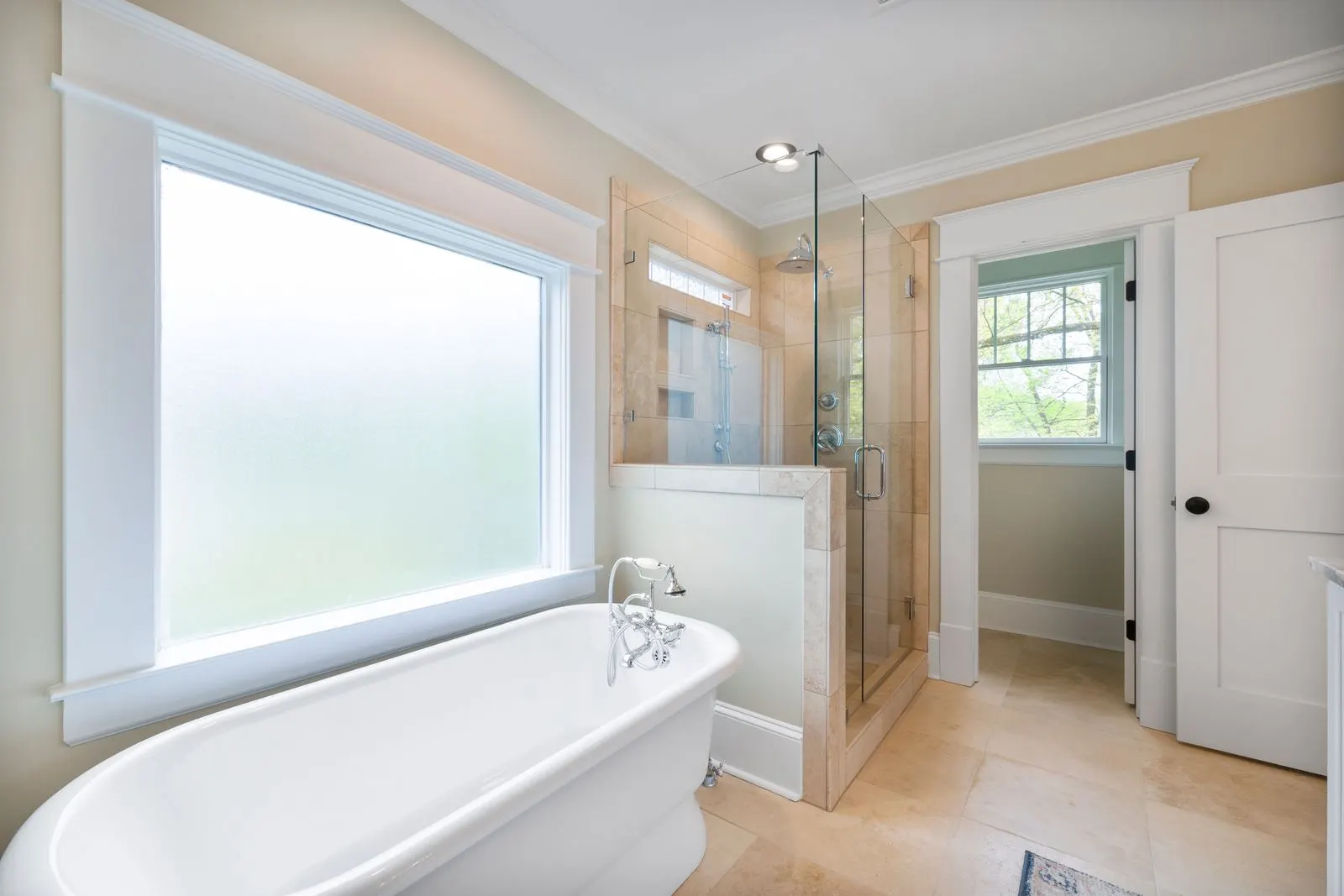
Choosing window film by room means answering for each pane: does this spot need less sun, privacy, or protection from broken glass? Living rooms usually need less glare while keeping light, bathrooms need privacy, doors need safety. The table right below covers each position, and the sections after it explain why.
Quotes often say one line: "film all glass, film X". Handy for whoever does the invoice, but living room glass and bathroom glass do not share a problem, and may not even be the same type of glass. The door might be tempered glass while the window next to it is ordinary annealed glass.
The view of this article, and it is our reasoning: a decent company quotes pane by pane, not by total square meters. The reason is not the money. When they quote per pane, they are forced to look at each pane.
Window film by room: quick reference table
| Position | Main goal | Film usually considered | Avoid |
|---|---|---|---|
| Living room | Cut glare, keep light | Light solar control film | Dark film, mirror film |
| Bedroom | Less sun, privacy | Solar control film, plus curtains | Trusting film for privacy at night |
| Kitchen | Less sun, easy to wipe | Light solar control film | Film right next to heat and grease |
| Bathroom | Privacy | Frosted film | Static cling film in damp areas |
| Balcony | Less sun, keep the view | Solar control film, possibly safety | Mirror film in apartment buildings |
| Doors | Hold broken glass | Safety film | Treating film as a substitute for safety glass |
| Skylight | Block overhead sun | Exterior shading first, film second | Filming before you know the glass type |
| Office | Screen glare | Light film, frosted film for meeting rooms | Darkening the whole floor |
| Shopfront | Goods visible, less sun | Clear film, decals | Reflective film |
The table is a relative assessment compiled from industry documents. Individual products vary in quality, and the actual glass type can make a suggestion in the table unusable.
Before you use the table, remember one condition: does sun actually reach the glass? For glass with no direct sun, you can skip the "less sun" part, and that saves you a whole line item.
Living rooms and bedrooms: living with that light every day
The living room is the easiest place to get wrong, because people decide while they are hot. In harsh afternoon sun, dark film sounds very sensible. But the next morning, and through the cooler months, the room stays just as dark. Choose the lightest film that still solves the glare. More than half of solar energy lies outside what the eye can see, as Pilkington's bulletin says, so a light film is not a weak film.
Bedrooms work differently. You use them most at night and early morning, so "dark enough to sleep" is a job for curtains. Film handles the afternoon sun that heats the room before bedtime. Blackout curtains handle the rest. Hang curtains a little away from the glass, not pressed against it, because curtains tight against the glass trap heat and push it back into the pane.
West-facing rooms carry their own risk of shadows and glass cracking, covered in a separate article on film for west-facing windows.
Kitchens and bathrooms: water, grease and steam
Few people think about the kitchen until the window by the stove catches afternoon sun right at cooking time. A light film is enough for that. What deserves thought is cleaning: glass near the stove picks up grease and needs frequent wiping, so ask whether the film has a scratch-resistant layer, and avoid hard tools. If there is a heat source or open flame right by the glass, ask the installer first, because this is a condition not covered in the documents we read.
The bathroom is clearer: frosted film, because night is when you most need privacy, while the lights are on inside. Reflective film here is completely wrong, because it flips exactly when you need it. Static cling film is easy to remove, but it is described as unsuitable for damp areas and can peel over time. If you want light, apply it from the bottom edge up past eye level and leave the top clear.
Balconies and doors: safety comes first
Floor-length glass, sliding balcony doors and front doors are where people bump into glass. There, the first question is not how much heat, but where the glass goes when it breaks.
Safety film is PET film that holds fragments together, and its performance depends on the adhesive, thickness, installation and frame. Film does not make glass unbreakable, and it is not part of the structure of a glass railing. If the balcony glass is in a high-rise and serves to stop people from falling, ask an engineer, do not stop at the film seller.
Balcony glass often catches afternoon sun, so many households want both jobs done. A combined film can be an option, but remember that an apartment balcony is part of the building's exterior. Vietnam's 2023 Housing Law has a provision on painting or decorating the exterior of an apartment in ways that do not follow design and architectural rules. We have not found a rule specifically about film, so ask building management and check current local regulations before choosing reflective film.
Skylights: think about exterior shading first
Skylights and horizontal glass roofs catch midday sun, the kind no curtain can handle from inside. Shading from outside stops heat before it reaches the glass, so consider that option first. If you still go with film, you need to know the glass type and how the installer will reach it, both now and for replacement later. Window film cannot be used on plastic domes.
Offices and shopfronts: people outside need to see in too
These two positions are about work rather than living. Offices deal with screen glare and heat near the glass, and meeting rooms add frosted film for privacy. Shopfronts work the other way: the goal is for customers to see the goods, so reflective film in the daytime hides the very thing you are selling. Clear film with brand decals usually makes more sense.
How to use this table properly
Follow four steps. It takes one afternoon.
Walk around the house and number every pane. Note the direction it faces, the hours it gets sun, and its goal from the table above.
Identify the glass type. Tempered glass usually has a small etched stamp in a corner. Double glazing shows two layers when you look at the edge. If you are not sure, ask the company that installed the windows. The Efficient Windows Collaborative also advises having a qualified person check the location, type and condition of the windows.
For annealed glass, tinted glass and double glazing, ask about compatibility before you talk about film models. The table in the west-facing window article shows the risk for each type.
Compare specs within the group you chose. How to read them is in our overview of window film specifications. The film groups are introduced on the architectural film page.
Do not try to film everything at once. Do the panes with obvious problems first, live with them through one sunny season, then decide on the rest. On a limited budget, this is usually the choice you will regret least.
Next step
Make a list of your panes using the four steps above, then send it to the VEGO team through the contact page. With a pane-by-pane list, the advice goes straight to where it is needed.