Can window film crack glass? It can, but not every pane: the risk is concentrated in ordinary annealed glass, tinted annealed glass and double glazing made from annealed glass, while tempered glass sits almost outside the danger zone. What decides it is not how dark the film is but how much energy the glass absorbs. Checked properly, the risk is low, but no technical document says it is zero.
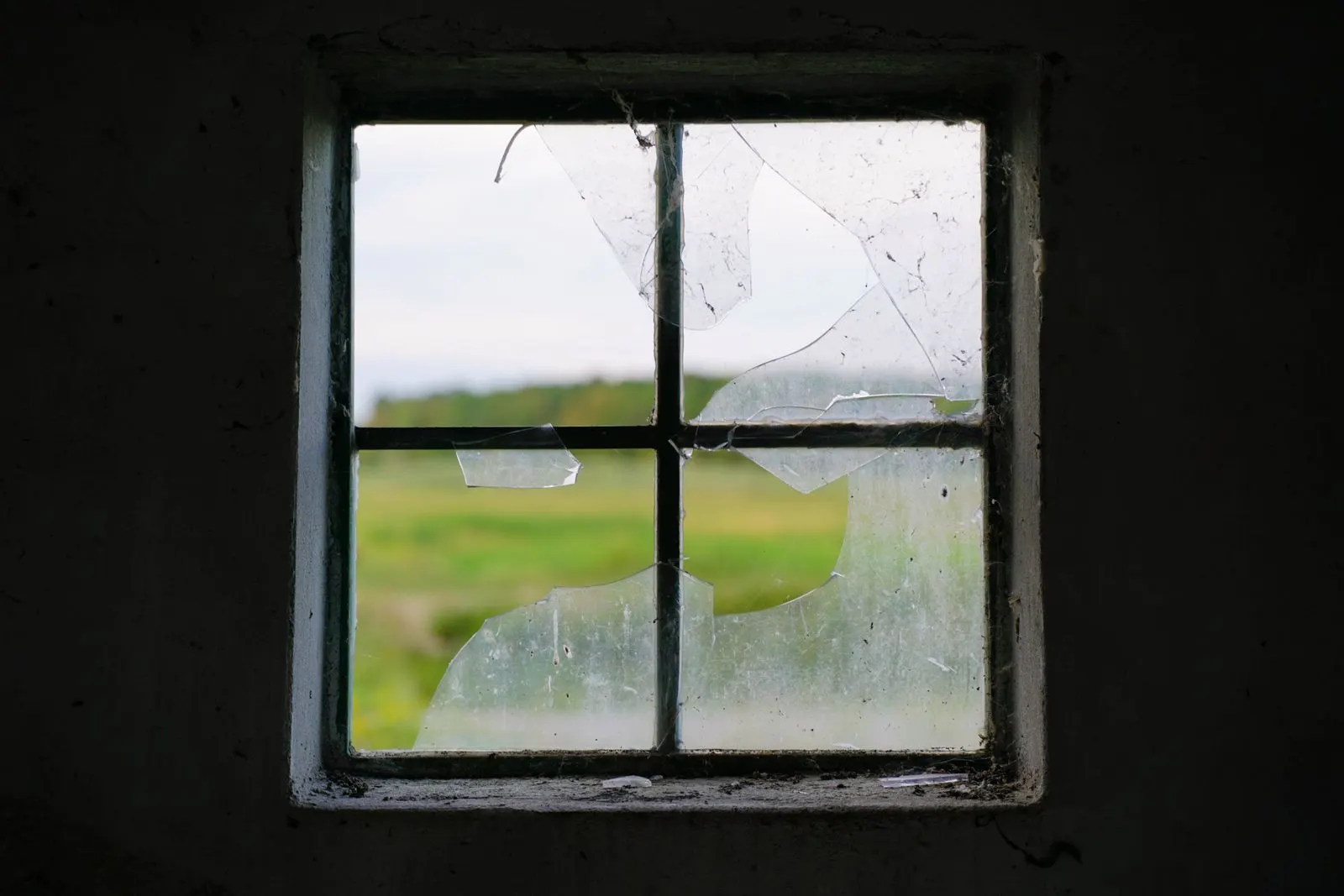
Three weeks after installation, a crack runs from the edge of the glass toward the middle of the window. No impact, no storm. The homeowner calls the tint shop, the shop blames the glass, the glazier blames the film. That story usually starts with a quote where nobody asked "what kind of glass do you have?". And that should be the first question.
Glass cracks from temperature differences, not from heat
A pane that is hot all over is not the problem. A pane that is hot unevenly is.
The middle of the pane, out in the sun, heats up and expands. The edge, tucked in the frame and out of the sun, stays as it is. The cool zone pulls on the hot zone, stress gathers at the edge, and if it goes past what the glass can take, a crack appears.
The European Window Film Association (EWFA) document names sun as the main cause of this temperature difference, and the bigger the difference, the bigger the stress. Film enters the story because it changes how the glass takes on heat. The Efficient Windows Collaborative explains it briefly: film is usually applied on the room side, and the energy it neither reflects nor transmits is absorbed, which raises the glass temperature.
The article on window film for west-facing windows covered choosing film for a room with afternoon sun. This one goes into the other side: the glass itself.
The number flyers do not print: absorbed energy
Try some simple addition. Solar energy reaching the film has only three paths: it passes through, bounces back, or stays. So absorption equals 100% minus transmission minus reflection. The numbers below are assumptions for illustration, not from real films.
| Hypothetical film | Transmitted | Reflected | Absorbed |
|---|---|---|---|
| A | 30% | 40% | 30% |
| B | 30% | 10% | 60% |
Both films let the same amount of energy straight into the house. But film B holds twice as much as film A right on the glass. Some of that heat gradually radiates out to both sides, so the two films do not feel exactly the same inside the room either. Still, from the glass's point of view, they are two different stories.
EWFA ranks absorption as the most important film property in this assessment, ahead of transmission and reflection. The same document warns that a film's numbers on one glazing system can mislead when carried over to another.
From here on it is our view, drawn from those two points: the spec sheet you hold at the shop was written to compare coolness, while the glass cracking question needs a different number. VLT, or the numbers on the spec sheet, cannot answer the question of absorption on your glass. So when a shop relies on darkness alone to say "this film is safe", that is an answer to a different question.
A film that looks clear is not automatically harmless either. A technical bulletin from an international glass maker points out that more than half of solar energy lies outside what the eye can see, so a colorless film can still absorb a significant amount.
Can window film crack glass? It depends on the glass type
The table below combines the EWFA document with the glass maker's bulletin.
| Glass type | Thermal risk | What to check |
|---|---|---|
| Tempered glass | Very low | Still check for damage, seals, the window |
| Heat-strengthened glass | Low | Only special conditions need review |
| Clear annealed, single pane | High if the wrong film is chosen | Always assess compatibility |
| Clear annealed, thicker than 12 mm | High | Review carefully with the film supplier |
| Tinted annealed, up to 6 mm | High | Review carefully with the film supplier |
| Tinted annealed, thicker than 6 mm | Very high | Usually exceeds allowable stress |
| Single annealed with solar control coating | Very high | Do not film |
| Double glazing from annealed glass, film on the inside face | High | May require heat-treated glass |
| Laminated glass | Unclear | Sources disagree, ask the film maker |
Risk levels are a relative assessment, not a measured probability.
According to EWFA, tempered glass can withstand a temperature difference of about 250°C and will not break from film-induced thermal stress in architectural applications, except in a fire. That is an industry association's claim, worth considering, but it does not mean tempered glass is immune to every kind of failure. Tempered glass that is already damaged is a separate story.
Tinted annealed glass is the group many people overlook, because the glass itself already absorbs sun before any film arrives. According to the bulletin above, adding solar control film to tinted glass thicker than 1/4 inch, about 6 mm, usually exceeds the allowable stress for annealed glass.
On double glazing, the glass maker's bulletin is the most cautious of all. Film on the room side makes the inner pane absorb a lot of energy, and it may break more easily if that pane is not heat-treated. With some film and glass combinations, both panes may need to be heat-treated even though film goes on only one. Few quotes mention that detail. Absorbing film also pushes up the temperature of the edge seal on sunny days, and some sealant systems can become unstable, leading to seal failure of the unit. The glass does not crack then, but moisture can get in, which is just as annoying.
On glass with a Low-E coating on the innermost face, surface number 4, the bulletin says clearly that film must never be applied.
What pushes the risk up, even with the right glass?
The same pane can end up very differently depending on how it is installed. The glass maker's bulletin recommends looking at shadows on the glass, how thermally isolated the glass is in the frame channel, edge cover, curtain position and edge quality.
Partial shading is the usual suspect. Awnings, balconies, signs and trees create cool zones right on the hot glass.
Curtains and blinds pressed against the glass hold heat in. One film distributor also lists air conditioning or heating vents blowing straight at the glass among the factors that cause stress. This is common in offices and shops with ceiling-mounted air conditioners right next to the glass, so do not ignore it.
Filming only part of a pane should also be avoided. The document above says clearly not to apply film partially, because the filmed and unfilmed areas absorb heat differently. Homeowners who want to save money by filming only the top half should know this. Small decorative frosted bands are also worth asking about.
Chipped glass edges usually sit hidden in the frame, so nobody sees them. EWFA notes that breakages at low stress usually start from damage on the glass. When film raises the stress, a small chip that used to be harmless can become the starting point.
Pane size, thickness, glass color and frame type are all on the EWFA list of factors. None of them rules out film by itself; they just add to the calculation.
How can you tell if a crack is thermal?
You do not need to be an expert for a first look. According to EWFA, a thermal crack in annealed glass usually starts away from the corners, and meets both the edge and the face of the glass at 90 degrees. Breaks at high stress also have small branch cracks on both sides of the main one, also at right angles. A crack without these features is hard to blame on heat.
Your eyes can raise a suspicion, not reach a conclusion. If something happens, photograph the whole pane and a close-up of the edge, note the date and time, the sun and curtain situation, and have a glazier look at it. Cracked glass needs to be made safe first; arguments about responsibility come after.
Who is responsible if the glass cracks?
This is the part to discuss before installation, not after.
The bulletin above says the glass maker takes no responsibility for glass performance once film has been applied on site, and advises getting a written recommendation and commitment from the film manufacturer or an authorized dealer. The Efficient Windows Collaborative also advises checking your window warranty before filming. Other makers may have different rules, but the spirit is the same: you are standing between two parties, so you need it in writing.
Before you agree, ask four things. How does the installer identify the glass type? Do they assess compatibility for the specific film? If the glass cracks within a certain period, where is the commitment to fix it written? Should they film one pane as a trial and watch it over a few sunny days?
A promise of "it will never crack" should worry you more than reassure you. EWFA writes that the risk stays low with a proper assessment, but never reaches zero, because of the nature of glass.
When should you stop?
Do not film when the glass edge is already chipped, the glass has a crack, or nobody can identify the glass type in a position that is hard to replace. On single annealed glass with a solar control coating, do not film. On double glazing still under warranty, ask the glass supplier first. If the risk is high and the only problem is sun, exterior louvers or an awning is a route that does not touch the glass at all.
Before you book an install
Photograph the corner of the glass to see if there is an etched stamp, note the thickness if you know it, and photograph the shadows in harsh sun. The architectural film page describes the glazing survey process. Send the details through the contact page and VEGO WINDOWFILM will take a look before you choose a film.