Safety window film works, but what it does is hold the pieces together when the glass breaks, not stop the glass from breaking. If you want the whole pane to stay in the frame, the film has to be anchored to the frame. For balustrades, high-rise facades or partitions people lean on, film does not replace an engineer's calculations.
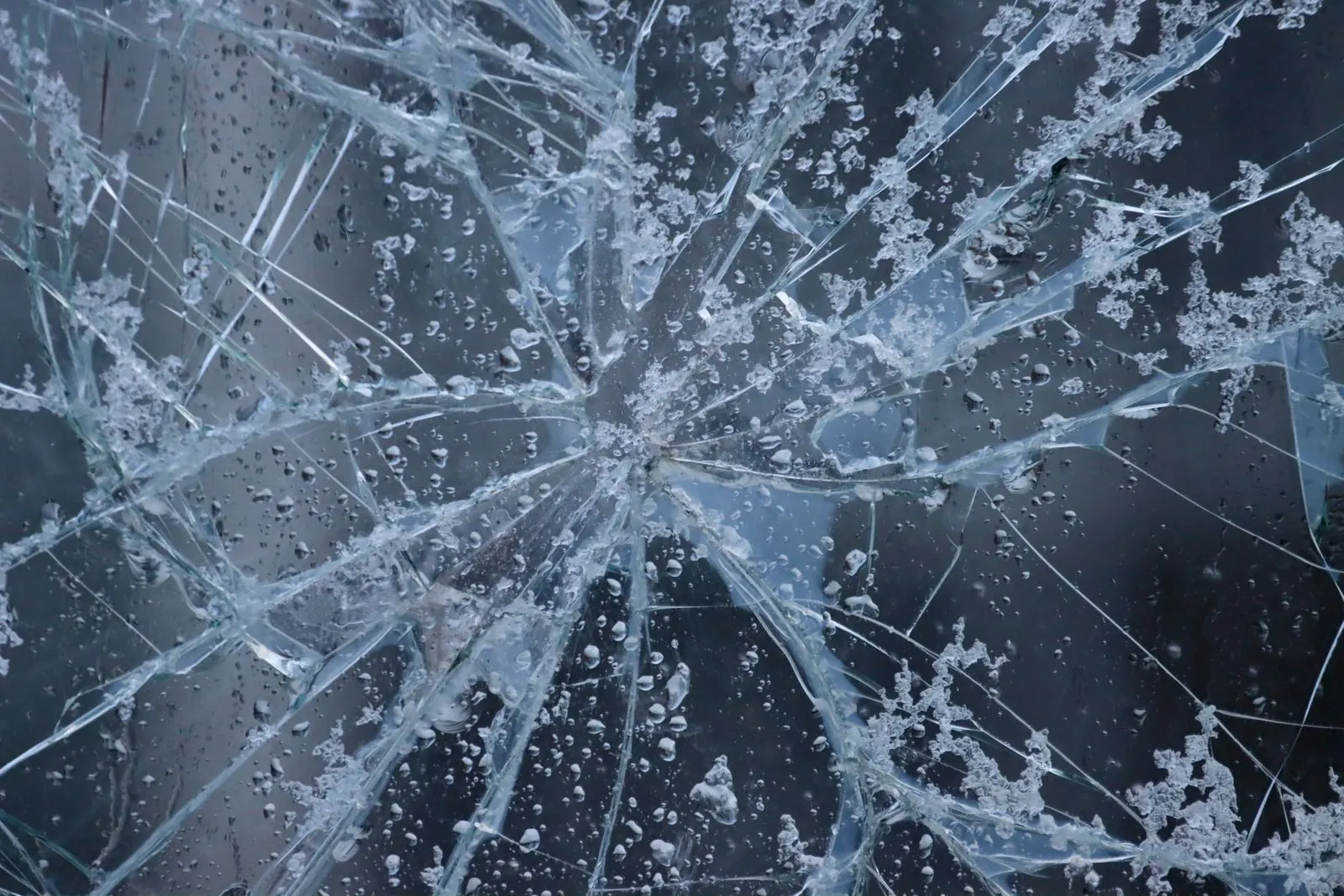
The Vietnamese name for it translates as "anti-shatter film", and that sends a lot of people off in the wrong direction from the start. The familiar image is a hammer hitting a filmed pane, the glass crazing all over while staying in place. That clip is honest about holding the pieces, but the glass is broken. What a buyer should ask is what happens next, after the blow.
What does safety window film actually do?
It is a polyester (PET) layer thicker than ordinary heat control film, bonded to the glass with a strong adhesive. An overview of safety and security film describes its main purpose as holding glass together when it breaks. Because it goes on after the window is installed, it is a way to upgrade an existing pane without replacing it.
The clearest benefit is a lower risk of shards flying into people. Ordinary annealed glass usually breaks into large, sharp pieces, so that is the glass film helps most. Low, floor-level glass in a home with small children, old shower screens and panes beside walkways are the places people usually think of first.
Film also helps against intruders, at the level of slowing them down. The overview uses the word delay, not prevent. A broken pane still stuck together in a sheet takes extra time and noise to get through. That time is only worth something if someone hears it, an alarm goes off, or a camera is watching.
The stiffness of the glass stays almost the same. As we read the documents, film does not make the glass meaningfully stronger before it breaks. It does its work after the glass has broken.
How thick is thick enough?
Film thickness is usually given in mil, where 1 mil is 25.4 µm. The common range runs from about 100 µm to over 525 µm, and the most common grades are 4 mil and 8 mil.
| Thickness on the spec sheet | Approximate conversion | Position in the range |
|---|---|---|
| 4 mil | about 100 µm | Low end, common |
| 8 mil | about 200 µm | Common, thicker |
| 21 mil | about 530 µm | Very thick, top of the range |
There is no one figure for every window. Thickness is chosen by the level of protection needed and the size of the pane. The overview mentioned above cites manufacturer suggestions of about 100 µm for glass up to 3 mm, and about 175 µm for glass thicker than 6 mm. Those are general suggestions, not a formula for your pane.
Two more points get overlooked. Thicker is not automatically safer if the adhesive is weak or the installation is sloppy: the overview says performance depends on adhesive bond, polyester thickness, installation quality, and the construction of the window and frame. And the thicker the film, the harder it is to apply on windows with glazing bars and tight corners. On a difficult pane, a skilled installer with an adequate film can get a better result than a thick film rushed on.
Whether thickness has anything to do with heat rejection is a separate question. The layer that helps film hold broken glass and the layer that helps it block sun do two different jobs.
What do the test standards tell you?
You will see a few names on spec sheets: ANSI Z97.1, 16 CFR 1201, EN 12600, BS 6206, and GSA-TS01 for blast pressure loads. This article only names them, because we have not been able to read the full texts to quote their pass criteria.
According to one industry document, ANSI Z97.1 and 16 CFR 1201 are impact standards meant to protect people from injury when glass breaks, not to rate resistance to forced entry. So a pitch along the lines of "it passes the safety standard, so it stops burglars" is mixing two things into one.
When a seller cites a standard, ask three more questions: what does the standard test, is there a test report, and on what thickness of glass was that result obtained. A test report belongs to one specific glass and film sample. If that sample is far from your window, the figure is for reference only.
Frame anchoring: the important part people skip
This is the big difference between film that is done once it is on and a real glass retention system.
Film applied to the visible glass only, not touching the frame, holds the pieces together. But the whole sheet of glass is still only sitting in its gasket. The overview recommends attaching to the window frame, not just the gasket, so the edge of the film becomes part of both glass and frame. There are two ways: structural sealant run along the edge (wet-glazing), or a metal batten fixed to the frame over the film.
A small calculation shows why this matters. A document on roof glazing gives an estimate of about 2.5 kg per m² per mm of glass thickness. A door panel 1 m wide, 2 m high and 8 mm thick would weigh 1 × 2 × 8 × 2.5 = 40 kg. That is our math, for a hypothetical panel.
Which leads to this article's view: unanchored film turns a rain of small shards into a single sheet that can weigh about that much, and the question changes from "will shards fly" to "will this sheet come out of the frame". In a ground-floor door, that sheet is still dangerous to someone standing next to it, but within a small area. On a high floor, with a sidewalk below, it is a different story.
Tempered glass is a case worth noting. It already breaks into small granules, so the benefit of holding pieces together is smaller than with ordinary glass. One installer training document also notes that broken tempered glass leaves very little for the film to hold onto, which makes frame anchoring even more meaningful for this type of glass. Putting thin, unanchored film on tempered glass to "make it stronger" is usually buying a feeling.
Choose by the risk you are worried about
The same film can be enough or not enough, depending on what you are worried about.
| What worries you | Unanchored film | Anchored film | Still needed |
|---|---|---|---|
| Shards hitting people | Helps a lot | Helps a lot | Safety glass if building new |
| Impact, small children | Helps a lot with ordinary glass | Helps more | Guarding at low positions |
| Intruders getting in | Slows them a little | Slows them more | Alarm, locks, camera |
| Storms, flying debris | Limited | Helps more | Engineer, storm preparation |
| Glass falling from height | Not enough | Needs separate design | Structural engineer, building management |
| Glass balustrade | Not a structural substitute | Not a structural substitute | Engineer, the right glass |
The table is a relative assessment pulled together from industry documents. Each product and each window is different.
High-rises and balustrades: when do you need an engineer?
There are three cases where we advise against deciding this alone with a film installer.
High-rise glass facades. A falling pane is a public safety issue. Filming, frame anchoring and wind load need review by someone qualified, together with the building management and current local regulations.
Balustrades and partitions people lean on. This is our view, not a quote from a standard: we found no document that treats film as a load-bearing part of a balustrade. A balustrade has to stand on the right glass, fixed the right way. Film may hold the pieces if that panel breaks, but an opening can still appear.
Sloped or overhead glass. This kind of glass is more likely to fall out of its frame when it breaks. Using film to "upgrade" it is a job for an engineer, not a film quote.
Does safety window film have anything to do with heat?
A technical bulletin from an international glass maker says clear shatter-retention films usually absorb little solar energy, so they can usually be applied safely. But the bulletin also reminds you that more than half of solar energy is outside the visible range, so a film that looks clear can still absorb a lot, and you still need to check with the supplier.
Films that combine safety and solar control need the same care as heat control film. On ordinary glass, tinted glass and double glazing, the thermal stress question is worked through in our article on window film for west-facing windows.
When do you not need safety film?
If you are about to replace the windows, choosing safety glass from the start usually makes more sense than adding a layer to old glass. If the glass is already laminated safety glass, it already holds its pieces thanks to the interlayer, and film may add very little. And if what you really fear is burglars, a budget spent on door locks and an alarm may do more.
Film also has a lifespan, and the adhesive can weaken over time in the sun. Ask about the warranty period and replacement options, and do not treat this as a one-time job for the life of the house.
Where to start
Write one sentence: what are you afraid will happen, to which pane. Then see our approach on the architectural window film page, read more in the support center, and send photos and dimensions through the contact page if you want VEGO WINDOWFILM's input on each pane.