Does window tint keep your car cool? Yes. Film reduces the solar energy coming through the glass, and what you notice most is the sun no longer burning your skin. But film does not cool the car. It only removes part of the heat, so how cool you feel depends on whether the car is moving or parked, where you sit and which side the sun is on.
Two owners with the same film can come back with opposite stories. The one who often drives the expressway in the afternoon says the burning on their arm is gone. The one who leaves the car in an open lot all day says nothing changed, it is just as stuffy when they open the door. Both are telling the truth, because they are asking two different questions.
How does the sun bring heat into a car?
Sunlight is energy spread across many wavelengths, and the eye only sees one stretch of it. Based on NREL figures cited on a summary page about sunlight, the energy reaching the ground splits roughly like this.
| Part | Approximate share | How you experience it | Related spec |
|---|---|---|---|
| Infrared | 52 to 55% | Invisible, felt as heat | IRR, IRER |
| Visible light | 42 to 43% | Glare, heats the seats | VLT |
| UV | 3 to 5% | Invisible, harms skin, fades interiors | UVR |
Shares cited from a summary source. Other sources split them slightly differently, so use them only to get a picture.
Two things from this table explain most of what you hear at the shop.
First, UV has almost nothing to do with feeling hot, because it is only a few percent of the energy. A film that blocks UV very well tells you nothing about how cool it is.
Second, visible light carries heat too, and its share is not much smaller than infrared's. So a film that blocks infrared superbly but is crystal clear still lets the heat carried by light come in. On the other hand, a technical bulletin from a glass manufacturer also notes that more than half of solar energy lies outside the visible range, so a film that looks clear can still absorb a lot. Your eye is not a measuring instrument.
Does window tint keep your car cool? The mechanism
When sunlight hits film, the energy goes three ways: some passes through, some is reflected back out, and some is absorbed. Material from the Efficient Windows Collaborative describes solar control film as working by reflection and absorption, not by blocking heat like a wall.
The reflected part is simple: it goes back outside and that is the end of it.
The absorbed part does not disappear. It warms the film and the glass, and the glass then gives off heat to both sides, outdoors and into the cabin. That is why you can touch tinted glass and find it hotter than before, even though the car is more comfortable. It does not mean the film is faulty.
That leads to a piece of reasoning worth remembering. When the car is moving, air rushes over the outer surface of the glass and carries some heat away, so the absorbed energy is shed outside more easily. When the car is parked, there is no airflow, and the hot glass keeps slowly radiating inward. The same film performs differently in the two situations. This is an argument from the mechanism; we have no measurement of our own for it on real cars.
As for measurement, the number that combines all three paths is TSER, total solar energy rejected, explained in detail in the article on window film specifications. Material from an international manufacturer shows how these numbers read:
| Film VLT | TSER | Energy still getting through |
|---|---|---|
| 19% | 65% | 35% |
| 29% | 62% | 38% |
| 77% | 44% | 56% |
VLT and TSER figures from an international manufacturer's material, measured on 6 mm clear glass. The last column is our own subtraction of TSER from 100, not a measurement on a car.
Read the table both ways. A 77% VLT film is nearly clear and still blocks 44% of the energy, so "light film is not cool" is wrong. But the darker films still let less energy through, so "darkness has nothing to do with it" is also wrong. The correct statement needs conditions: which film against which film, on which glass.
Why does each person feel it differently?
The thermometer in the car only measures the air. Your body feels a lot more than that, and in our view, this is the point most often missed when people argue about whether film is cool.
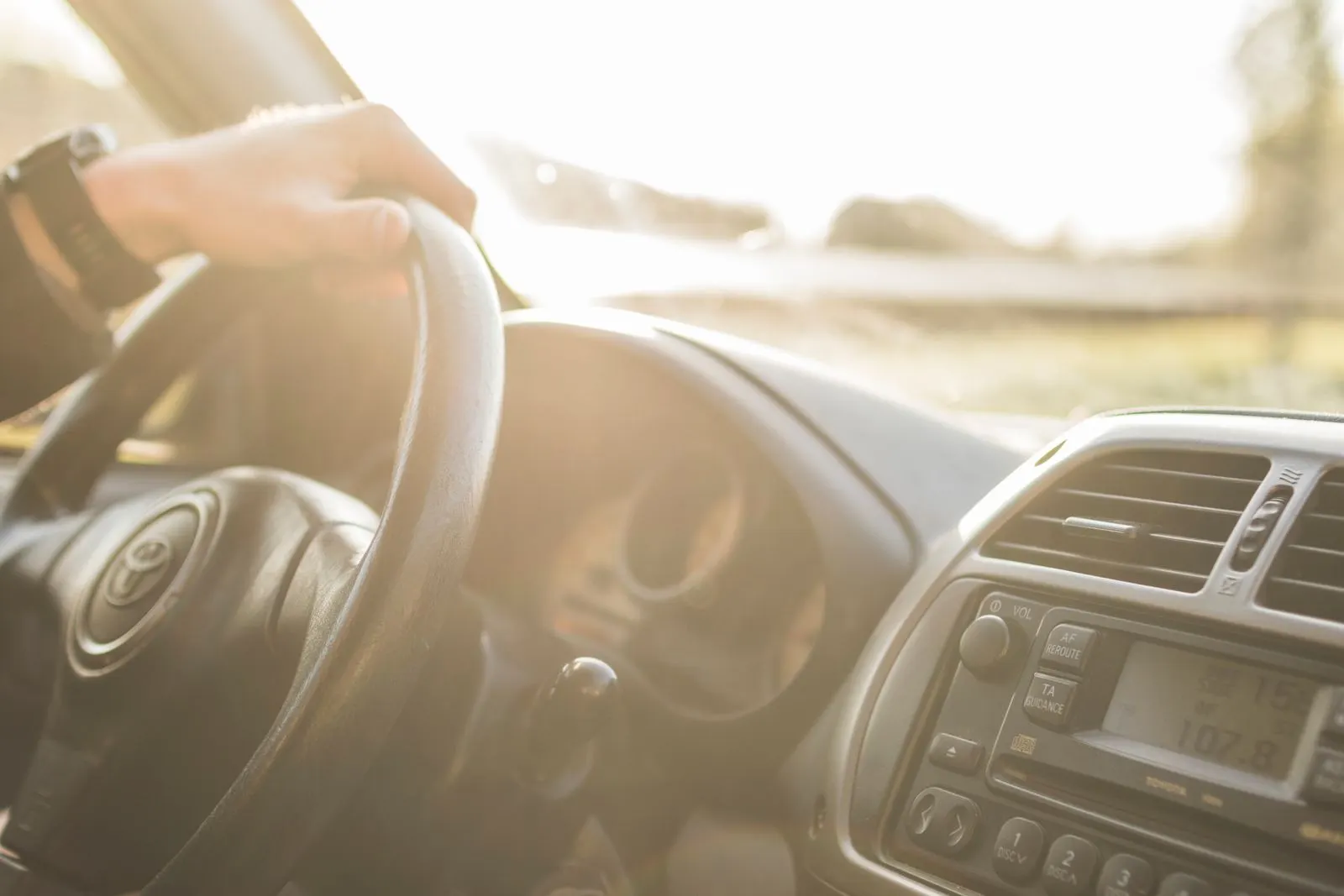
Sun shining straight onto skin. Sitting in the car with the sun on your arm, you feel the burn even while the air conditioning is cold. Film cuts this instantly, right where you are sitting. So one person can feel a big difference even though the cabin air barely changes. If you judge film only with a thermometer, you can miss the most obvious benefit.
Moving or parked. When parked, the whole car is in the sun, and film cannot cover the roof, the body or the sunlight that still gets through. A study in Arizona measured the dashboard at 68.9°C after about an hour parked in the sun; that study did not test film, so the number only shows how hot a parked car gets in a very sunny place.
Seats and steering wheel. Black leather seats, the dashboard and the steering wheel absorb sunlight and then radiate heat back into the space around them. Once they are hot, the cabin takes time to settle, even though film has reduced the new sunlight coming in. Light and dark interiors therefore feel different with the same film.
Where you sit, which side the sun is on. The driver has the windshield and front side windows; rear passengers have the rear side windows and sometimes the rear windshield too. Heading west in the afternoon, the sunny side takes more than the other. A car with nicely tinted side windows but an untreated windshield still gets the same sun on the thighs and face as before.
Roof glass. Owners of one EV model with a panoramic sunroof have still complained about the heat after tinting. A big sheet of glass overhead is a sun path that is very hard to deal with.
Air conditioning. Film cannot fix a weak evaporator. When an older car feels hot, sometimes the reason is under the hood.
How cool should you expect film to be?
Expect film to make the sun less harsh, your skin burn less, and the air conditioning strain less when you drive in the sun. Do not expect a temperature drop figure, because nobody can honestly give one for your car. Different glass, a different car color, a different time of day, and the result is already different.
The same goes for EVs. The real benefit is a more comfortable cabin, not a promise of extra range. The article on EV window tint covers this in more detail.
If your car parks underground, drives at night or only does short trips, this coolness does not get many chances to show, and a mainstream film, or no film yet, is a sensible decision. If you sit behind glass for hours in the sun, choose the VLT for each window position first, then compare TSER within the same VLT group. Reference setups are on the car window film solutions page.
If you want to check for yourself, the practical way is to sit in a car that already has the film you plan to buy, in real sun, on the sunny side. How your arm feels under real sunlight is worth far more than a hand held behind a sample pane in the shop.
Next step
Next time you drive in the sun, notice whether the discomfort is on your arms, legs, face or with the rear passengers, and which window the sun is coming through. Once you know, send your question to VEGO's contact page for a suggestion on which windows to prioritize.